How Smooche staged a foundation demo as a real morning routine
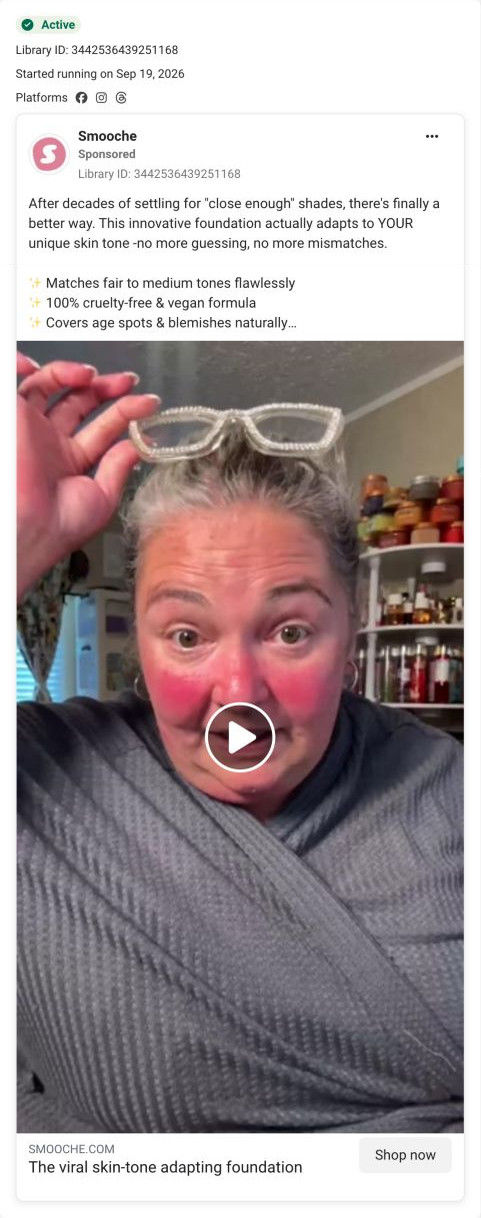
A creator video for Smooche's adaptive foundation: a woman in a gray robe, bare-faced, pushes her glasses up onto her head and looks into the camera before the demonstration. The copy promises a shade match for fair to medium tones and coverage for age spots, and Shop now opens the Reverse-aging Adaptive Foundation page.

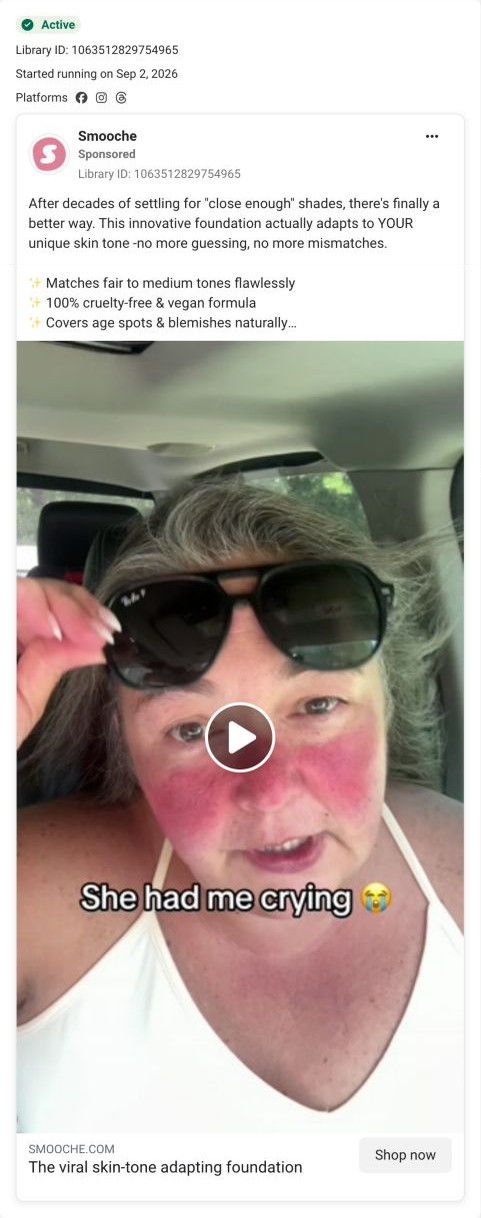
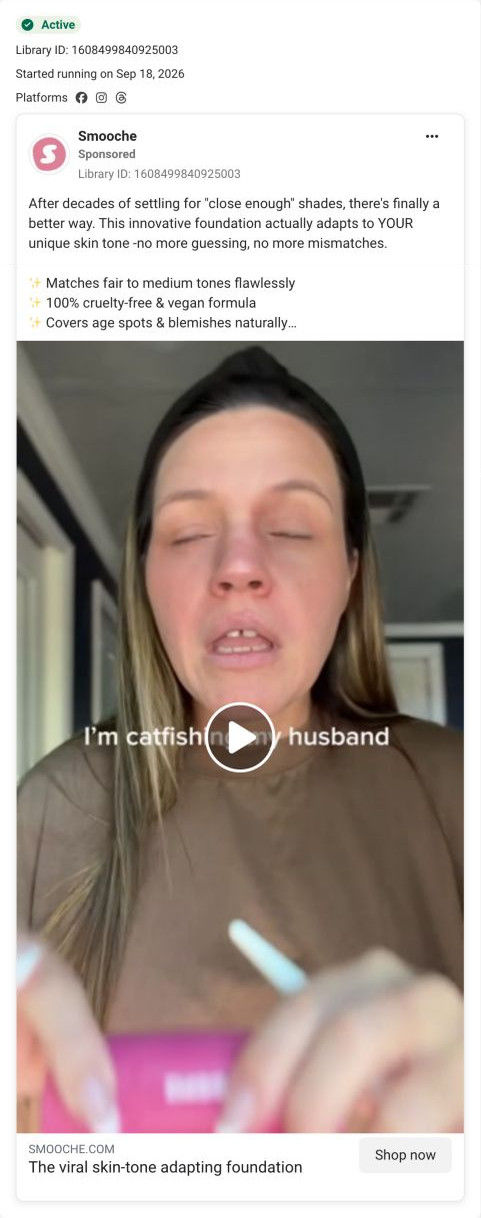
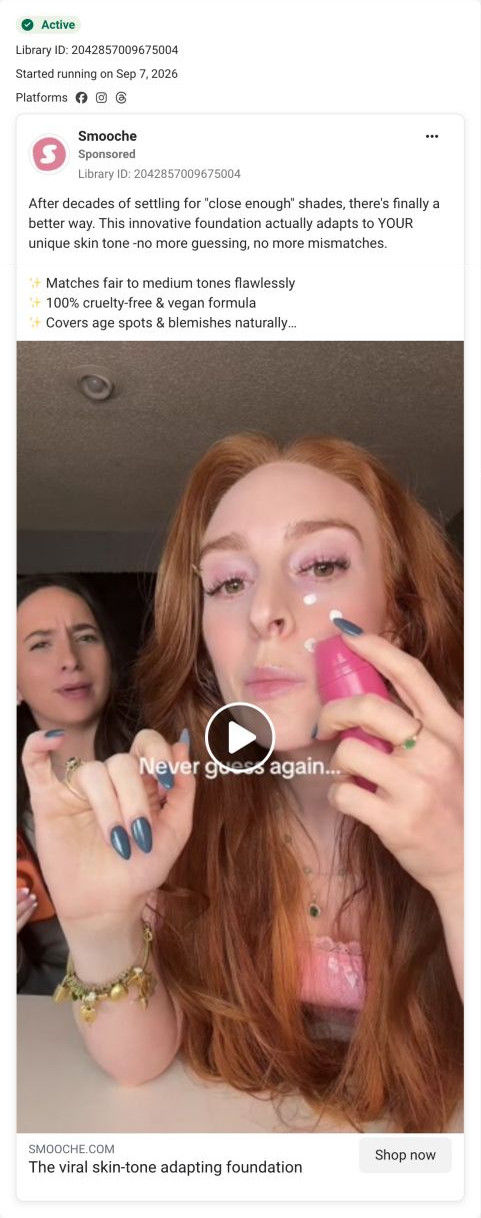
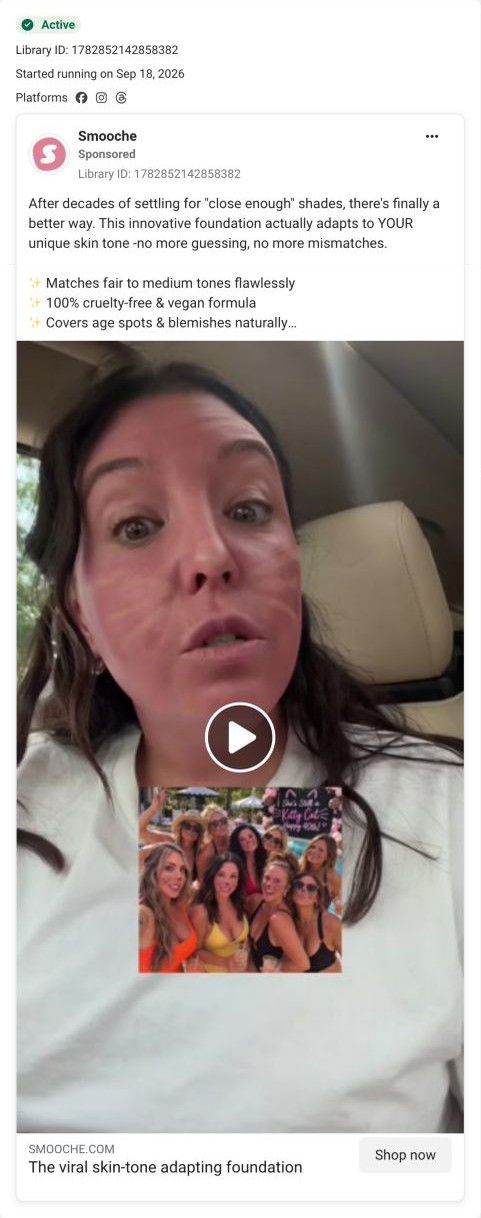
The current destination was captured on October 20, 2026. Page offers may differ from the original ad.
The viral skin-tone adapting foundation
A creator in a gray robe shows her face and glasses before the foundation demonstration. Compare the creative with the destination and explore the other ads sharing this route.
- Brand
- Smooche
- Observed offer
- No price or discount stated
- Creative angle
- Product demos
- Page type
- Product page
- Ad format
- Video
- Listed start date
- Sep 19, 2026
- Captured
- Oct 20, 2026
- Library ID
- 3442536439251168
- Destination
- smooche.com
Selected for its design and offer structure. Ad performance isn’t available in this collection.
What this ad does well
The robe, the shelves behind her and the glasses pushed up all say this is her real morning, which makes the demo that follows feel unstaged. Starting bare-faced gives the viewer a clear before, so the foundation's change has something to be measured against. Her wide-eyed expression to camera reads like she's about to tell you something, which is the tone of a friend, not a brand. It started running on Meta on Sep 19, 2026, one of 8 ads that land on this product page.
What's missing
There's no caption in the opening frame we captured, so the hook relies on her expression alone, and a viewer scrolling with sound off has no words to grab. A short caption naming the problem (a shade that never matched, or age spots showing through, framed as hers) would give the frame a reason to stop for. As with Smooche's other creator videos, the body copy is shared text, so nothing in it ties to this demo or this creator.
Beat by beat
- 0-3sA creator in a gray robe pushes sparkly glasses onto her head and looks into the camera, bare-faced.
It sets up a real before in a real home, so the demo feels unstaged.
- CopyThe text opens on decades of close-enough shades and claims the foundation adapts to your skin tone.
It names the problem the demo will address.
- CopyBullets claim fair-to-medium matching, a cruelty-free vegan formula and natural coverage for age spots.
It gives readers quick claims to weigh.
- HeadlineThe link line names the viral skin-tone adapting foundation, beside Shop now.
It labels the product clearly at the tap.
Where it sends people
Shop now opens the Reverse-aging Adaptive Foundation page. A demo ad sets up the how-it-works section well (three short paragraphs beside a model holding the product), and the how-to-use accordion in the buy box answers the practical question a viewer brings from a demo. The before-and-after split gives the result the video starts. The buy box's stock bar and countdown introduce urgency the ad never mentioned, which can feel abrupt to someone who tapped to learn more; a short demo clip near the price would bridge the two.
The page it sends people to: How Smooche's adaptive foundation page catches its creator ads
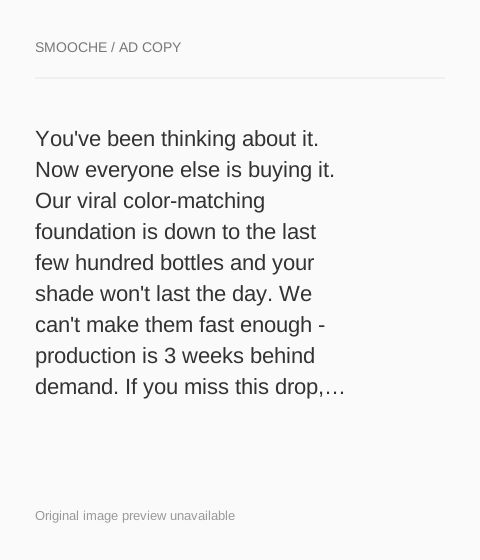
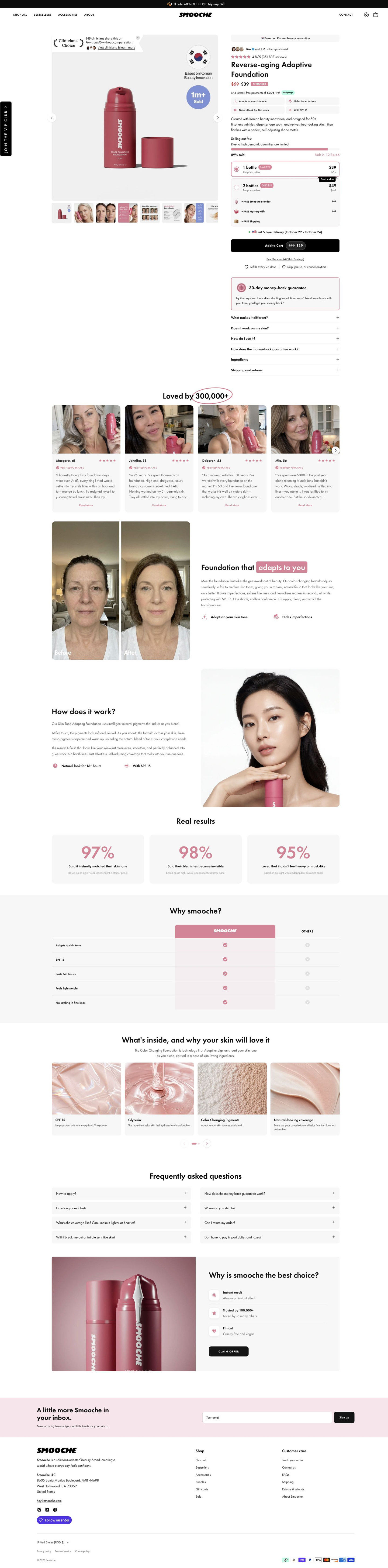
Smooche's Reverse-aging Adaptive Foundation product page: urgency, quantity tiers with free gifts and a guarantee card fill the buy box, then customer stories, a before-and-after, stats and a comparison table back it up. 8 ads in the Fluid library land here, mostly creator videos and demos, plus a humor video and a final-bottles scarcity graphic.
How the page is built
- 01Announcement bar and header
A sale-plus-mystery-gift line and a simple store header answer whether there's an offer today.
- 02Gallery
A pack shot with a clinician-choice seal, an origin badge and a units-sold circle, plus eight thumbnails of customer faces, infographics and before-and-afters, answers what results look like.
- 03Buy box top
An origin pill, an others-purchased avatar line, a star rating, a struck-through price with a Bestseller tag, an installment line and four benefit chips answer what it is and whether others trust it.
- 04Urgency and offer tiers
A stock bar with percent sold and countdown, two quantity cards, free-gift rows at struck values and a delivery date answer why now and how much to buy.
- 05CTA area
Add to cart with the sale price, a no-savings one-time link, refill and cancel terms, a money-back card and six accordions answer what I'm committing to and what if it doesn't suit my skin.
- 06Customer stories
Selfie cards with first name, age, stars and a verified label under a hand-circled customer count answer whether people like me use it.
- 07Before-and-after split
Side-by-side face crops with a highlighted headline show the change the brand claims.
- 08How it works
Three short paragraphs beside a model holding the product explain the claimed adaptive mechanism.
- 09Results stats
Three cards with large survey figures and a source note give the brand's percentage-based proof.
- 10Comparison table
A highlighted brand column against Others across five rows answers why this foundation.
- 11Ingredients and FAQ
Four ingredient texture cards and a two-column FAQ on use, wear, sensitivity, guarantee, shipping and returns answer what's inside and the last practical questions.
- 12Closing offer card and footer
A product photo with three icon reasons and a Claim Offer button gives a final way to buy, followed by the newsletter and footer.
The first fixes we would make
- The creator videos are the page's biggest traffic source in the library, and none of that creator footage appears on the page. Put a short creator clip of the color change in the gallery's first slots, so the visitor sees the same demo that made her tap.
- The page is titled Reverse-aging Adaptive Foundation while the scarcity ad calls the product Color Changing Foundation. Use one product name across ads and page so shoppers know they've landed on the right item.
Read the full breakdown of this page
Three hooks you could test
- Show a specific moment of use. “Still in my robe, coffee in hand, doing my face in one step.”
- Make the product the whole scene. “Bare face, one pump, no mirror tricks.”
- Lead with the uncomfortable problem. “Age spots still peeking through your foundation?”
What to borrow for your brand
- Film demos in the creator's real morning setting, robe and all, so the routine feels honest.
- Start bare-faced on camera so the product's change has a visible before.
- Add a short on-screen caption naming the problem, so sound-off viewers know why to keep watching.
One of 25 Smooche ads in the Fluid Inspiration Library, captured from the Meta Ad Library on Oct 20, 2026. We record that an ad ran publicly, not how it performed.