

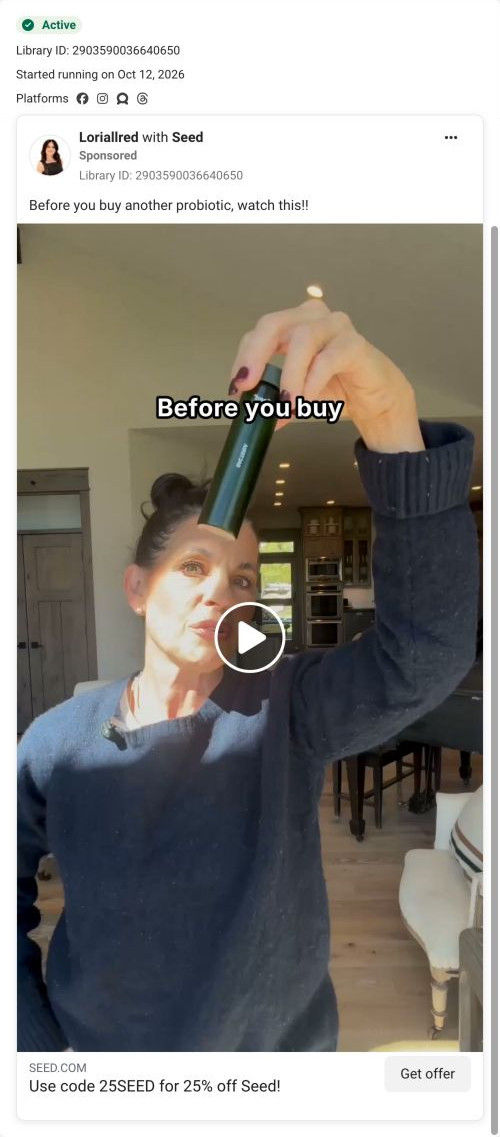
BobbyParrish with SeedSponsored
Esc
How Seed leads a static ad with the discount and two outcomes
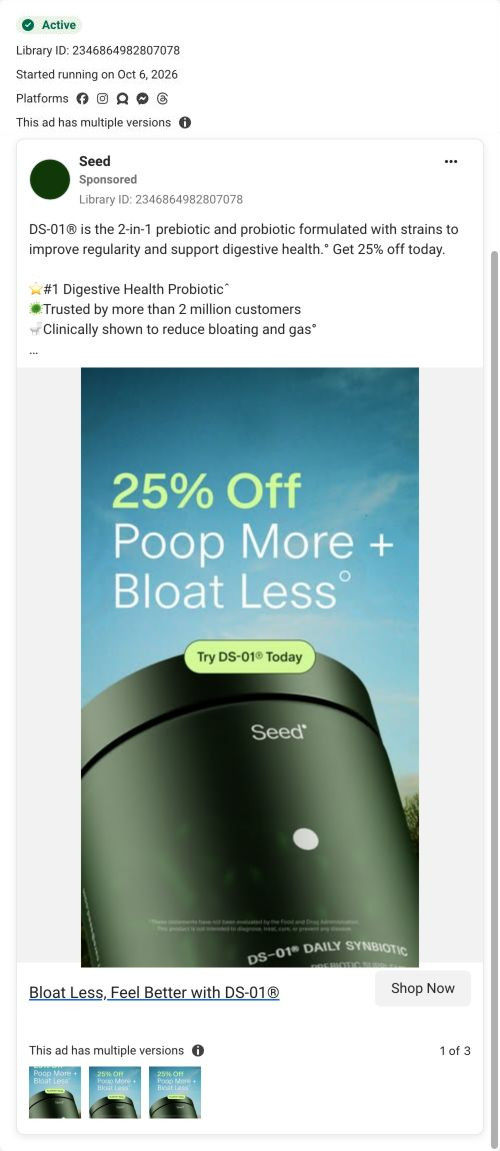
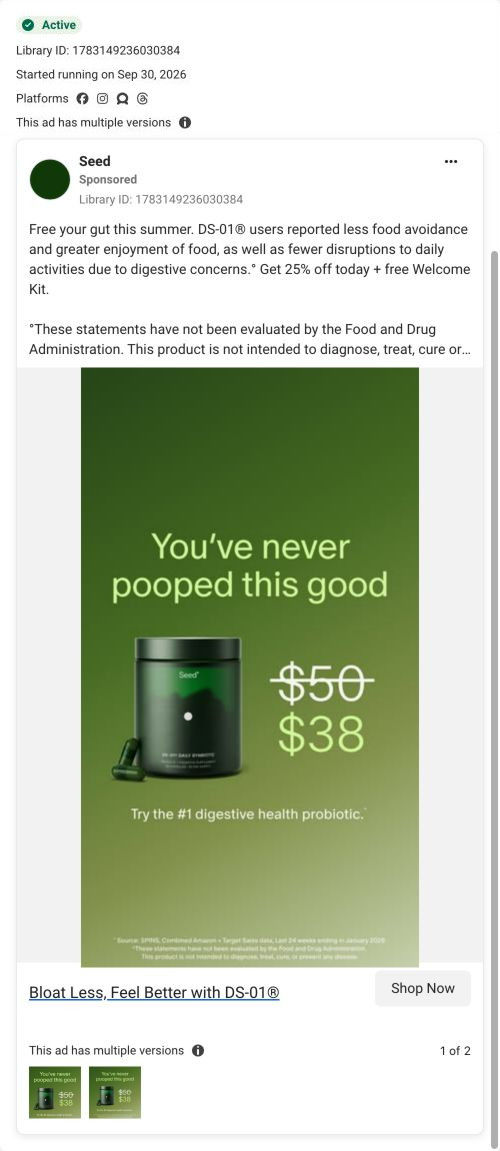
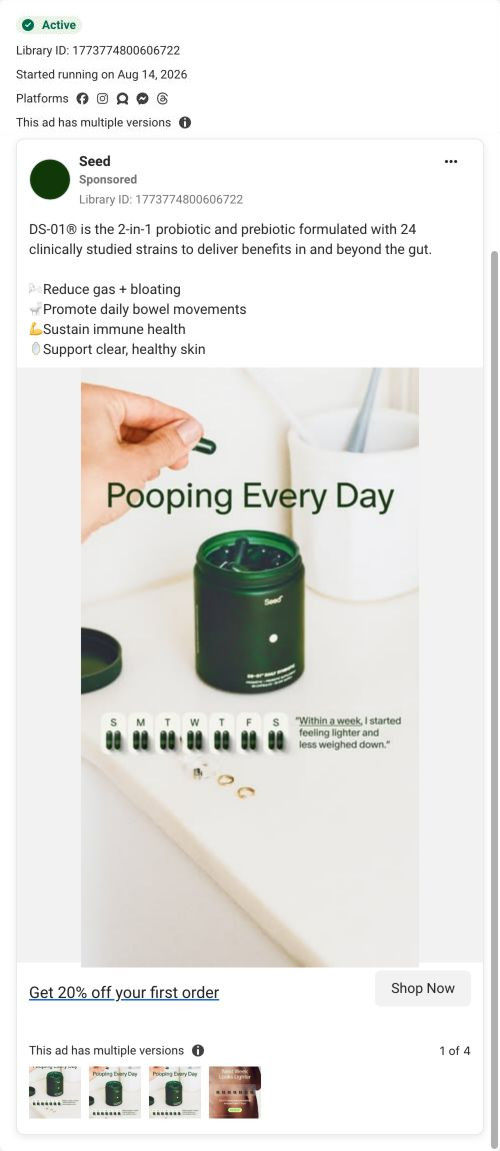
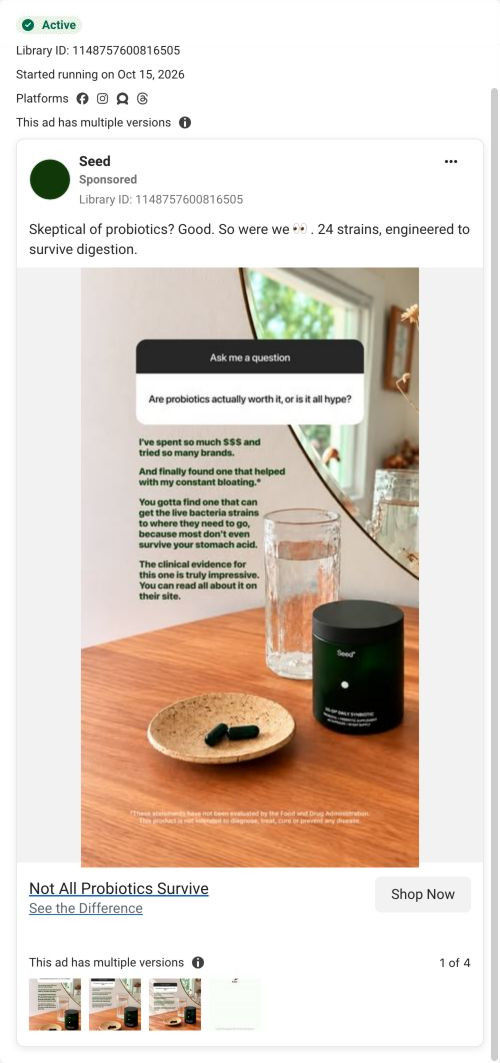
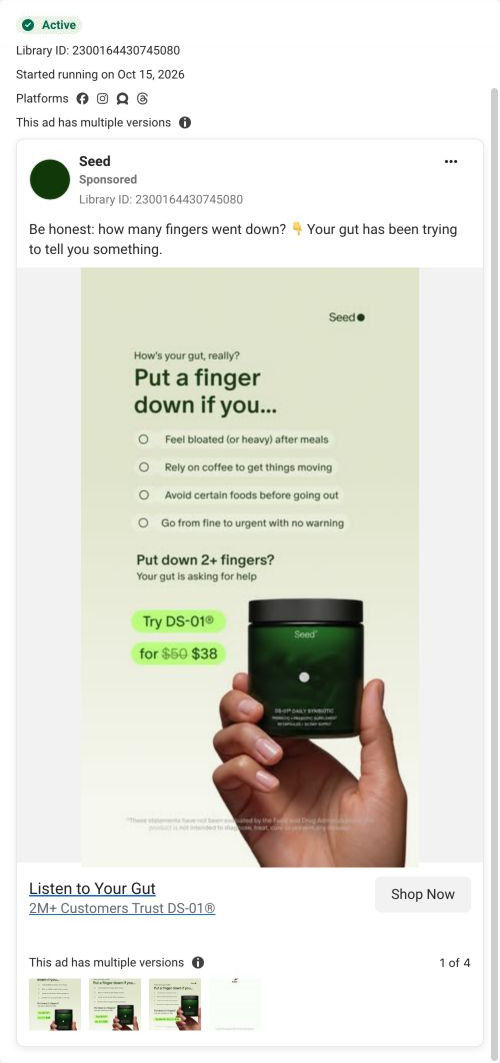
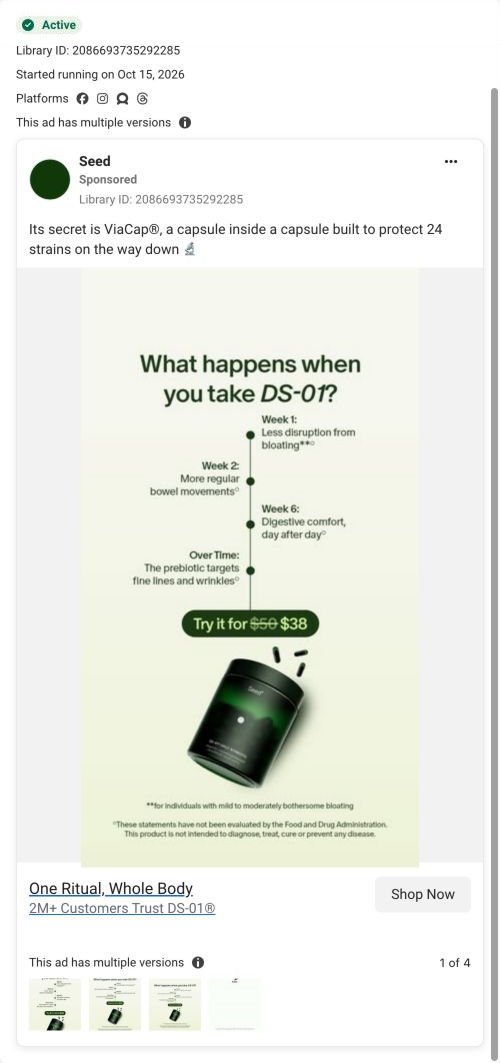
A Seed static image ad with a close-up of the DS-01 jar against a blue sky. The headline reads 25% Off, Poop More + Bloat Less, with a Try DS-01 Today button. The copy explains the two-in-one formula and lists Seed's ranking, customer-count and bloating claims. Shop Now opens Seed's 13-step quiz.
Seed
43 creatives lead here1 / 43

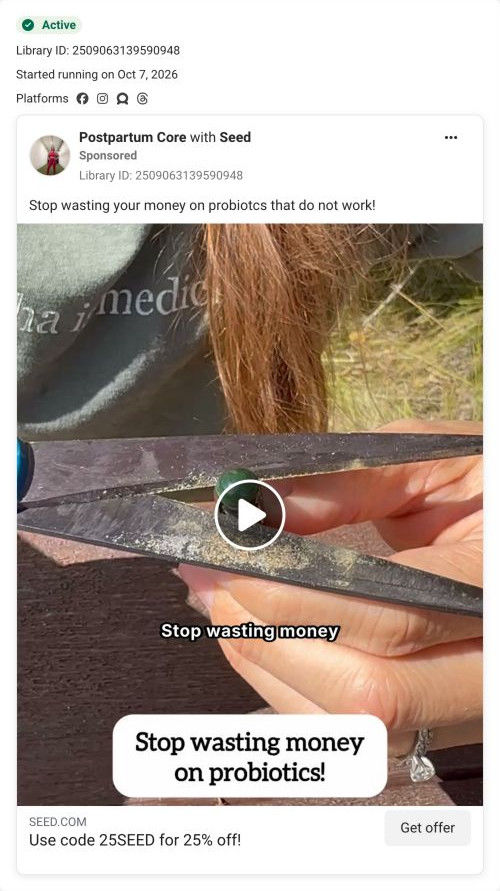
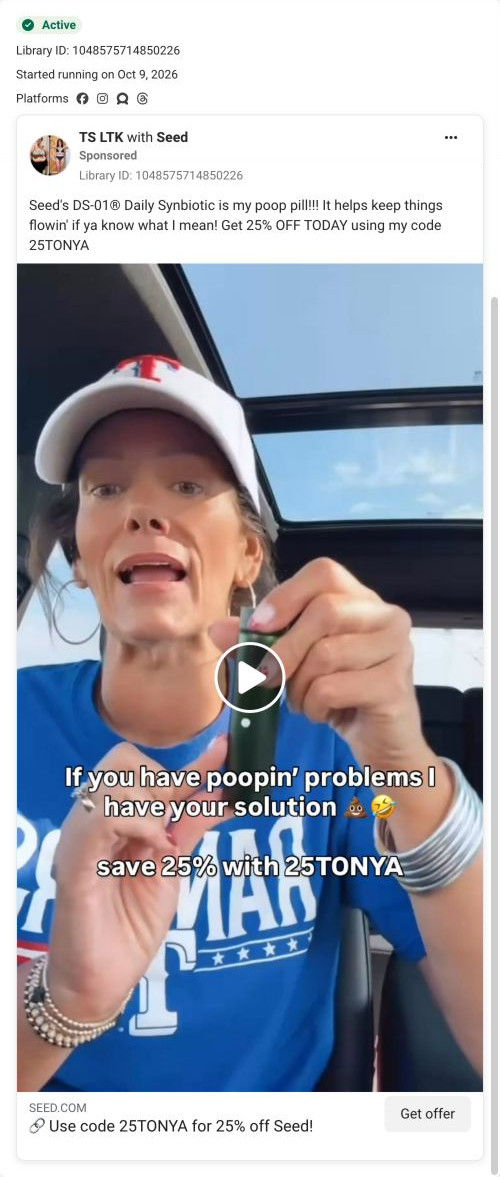


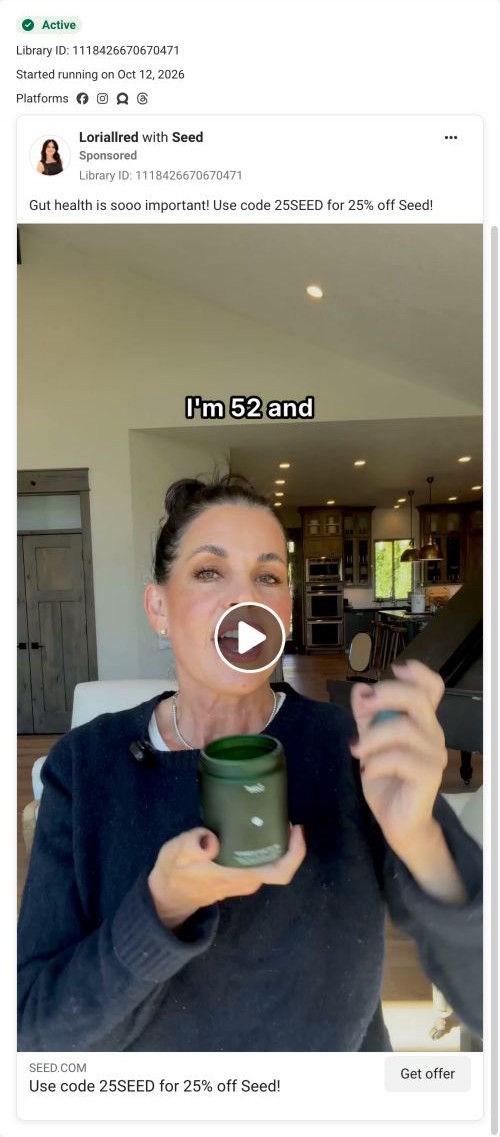
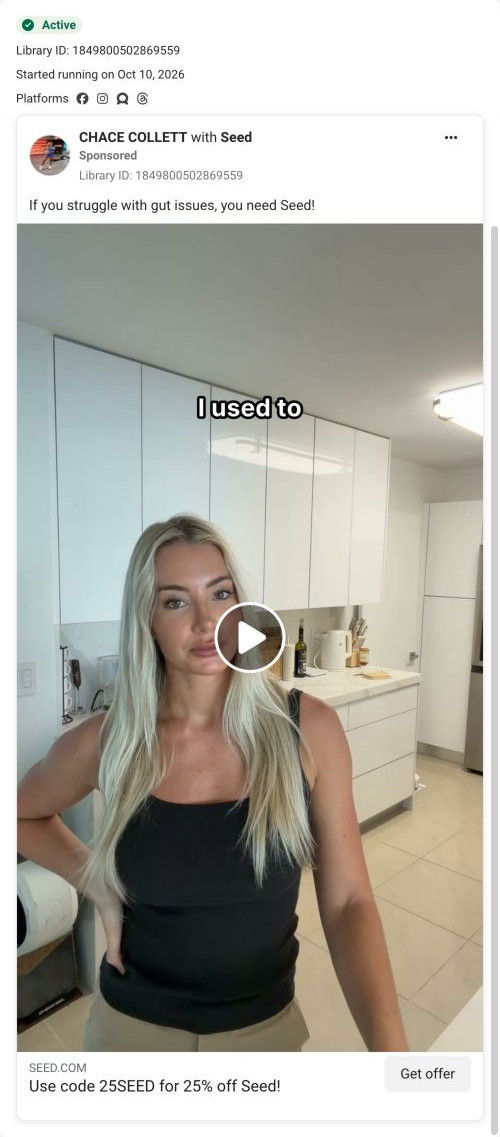


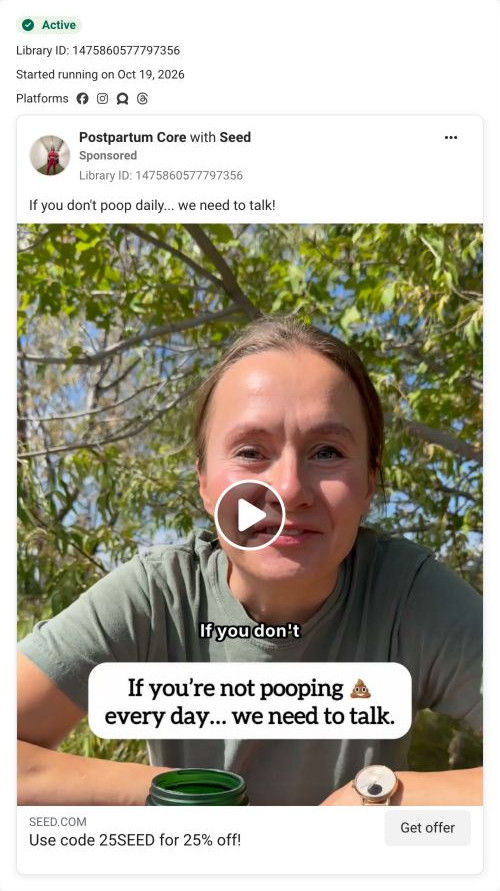
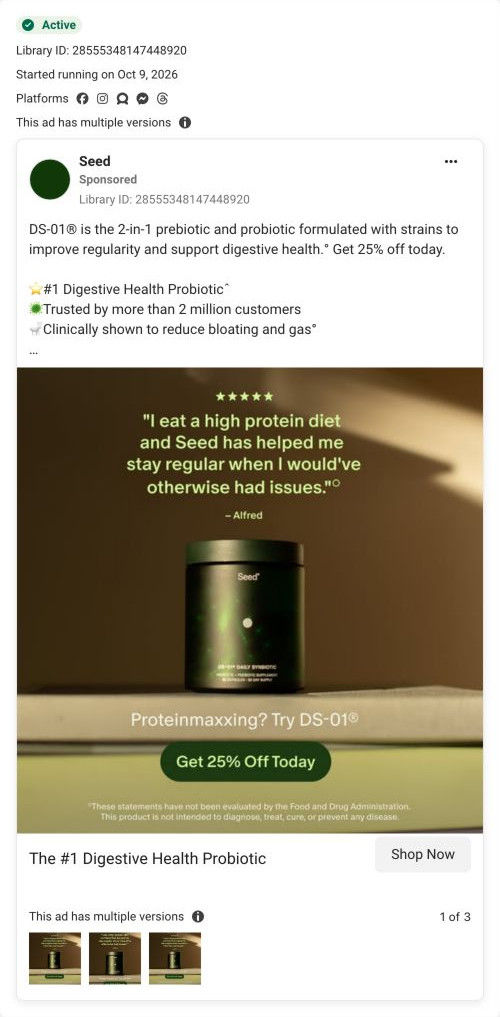


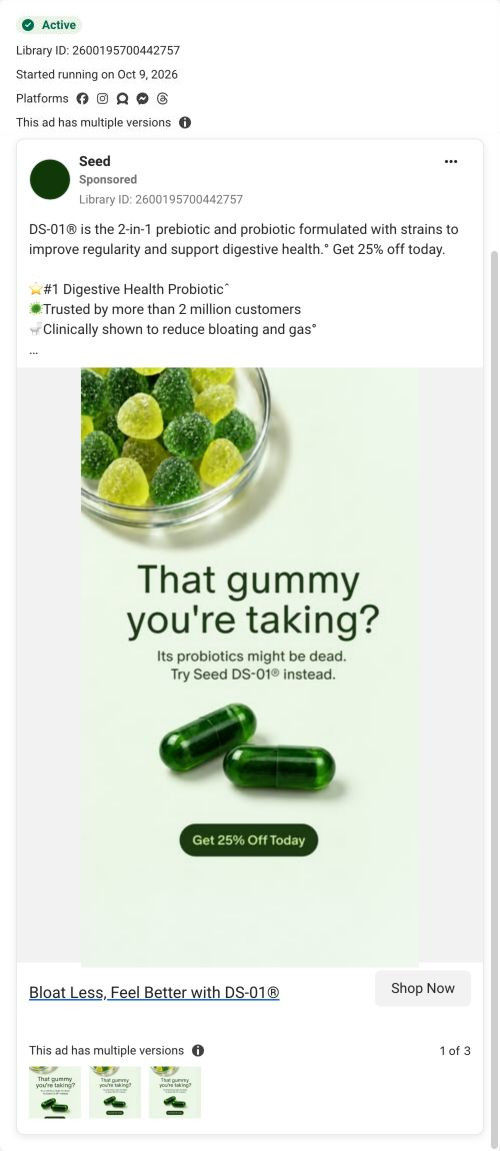

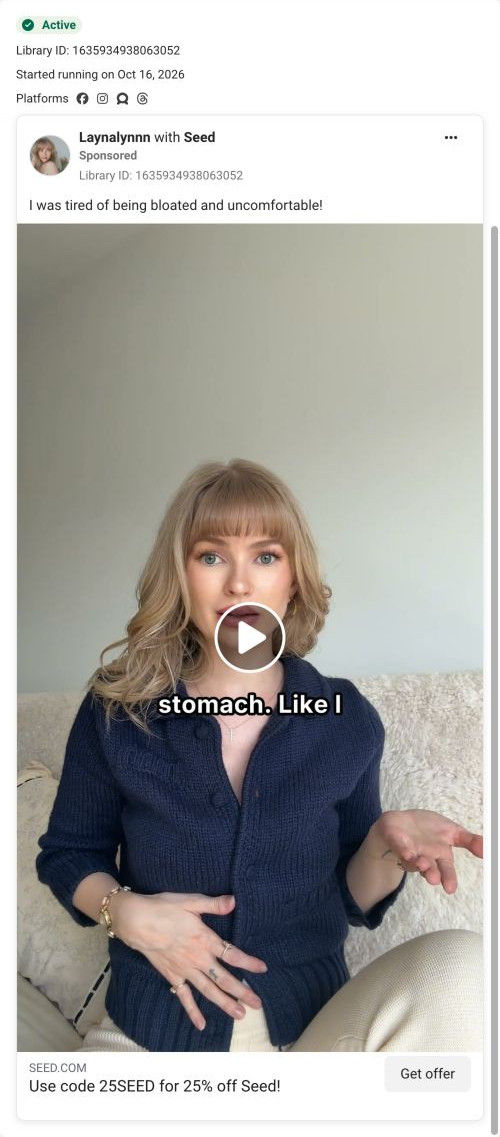


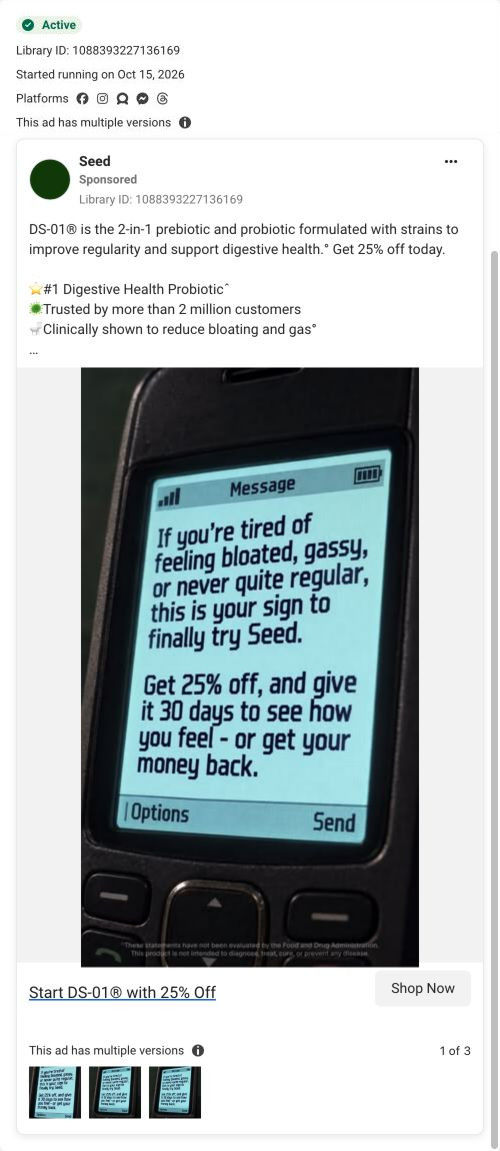
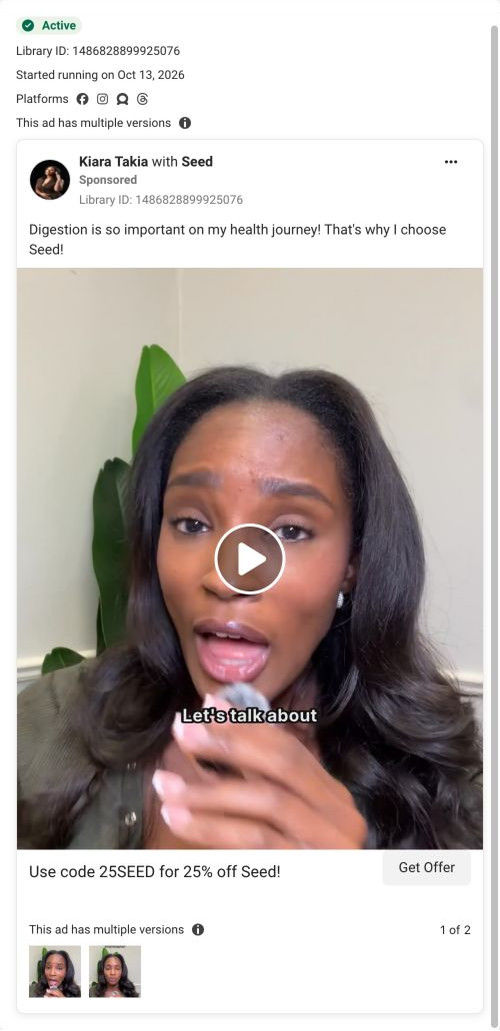
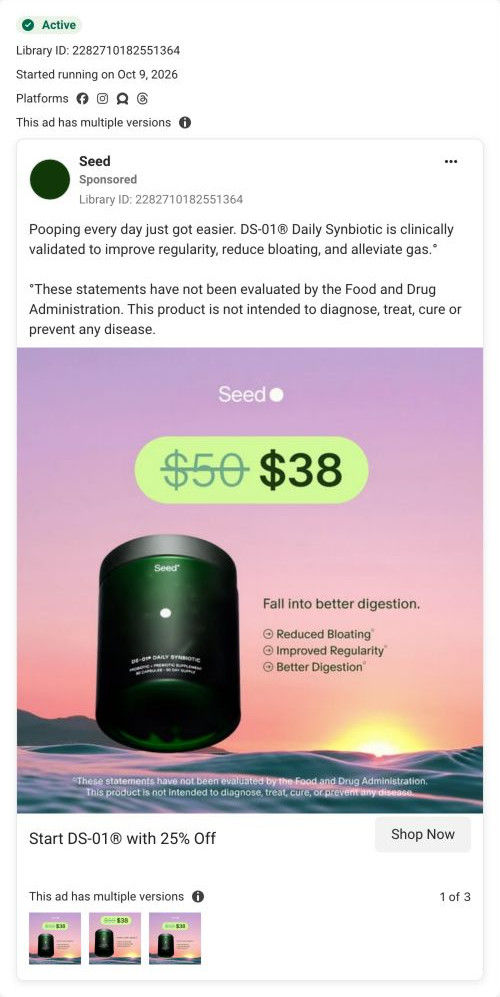
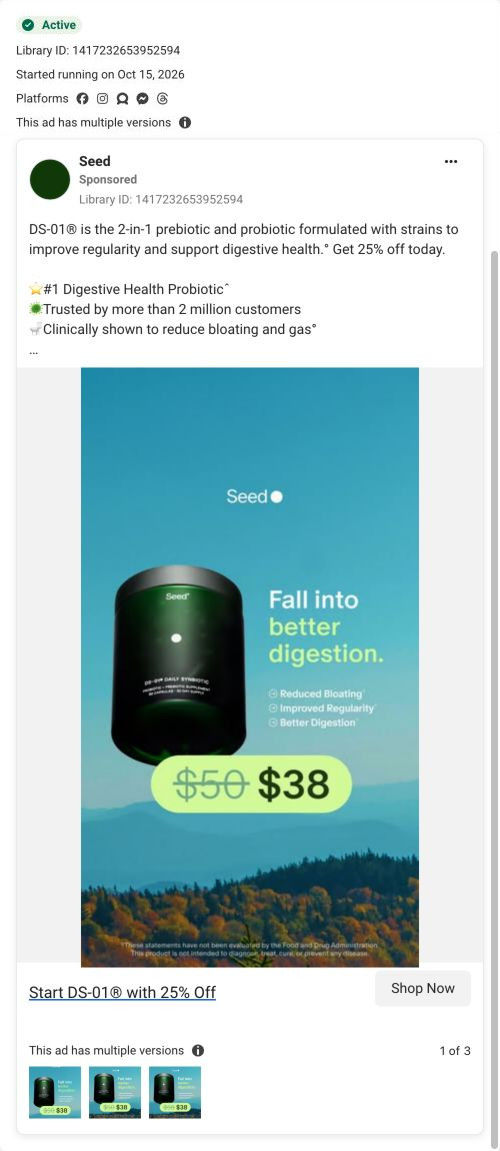
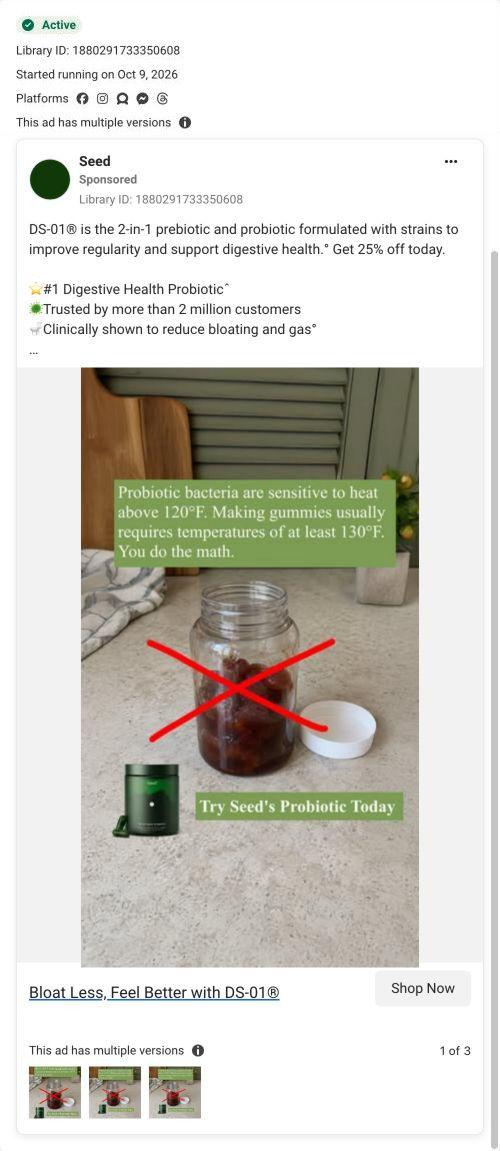
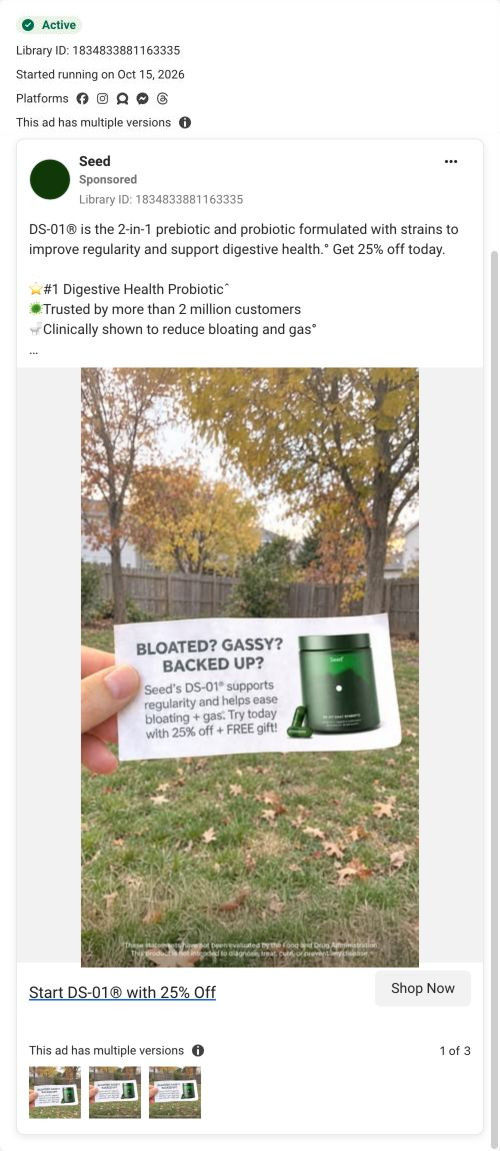
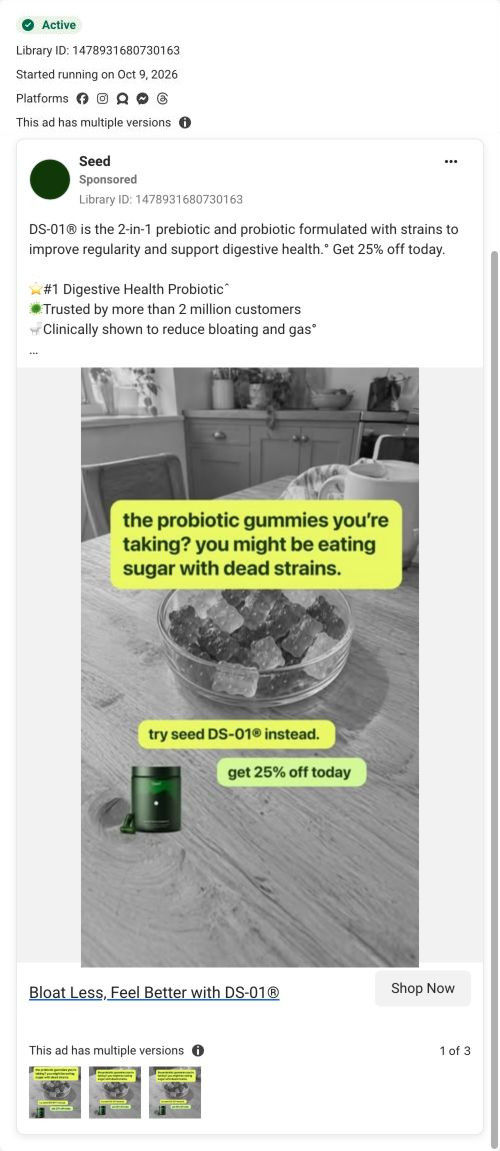
The Seed DS-01 quiz entry
Quiz entry screen only; personal health questions were not answered. A browser shopping-extension badge appears in the upper-right margin of this capture.
Bloat Less, Feel Better with DS-01
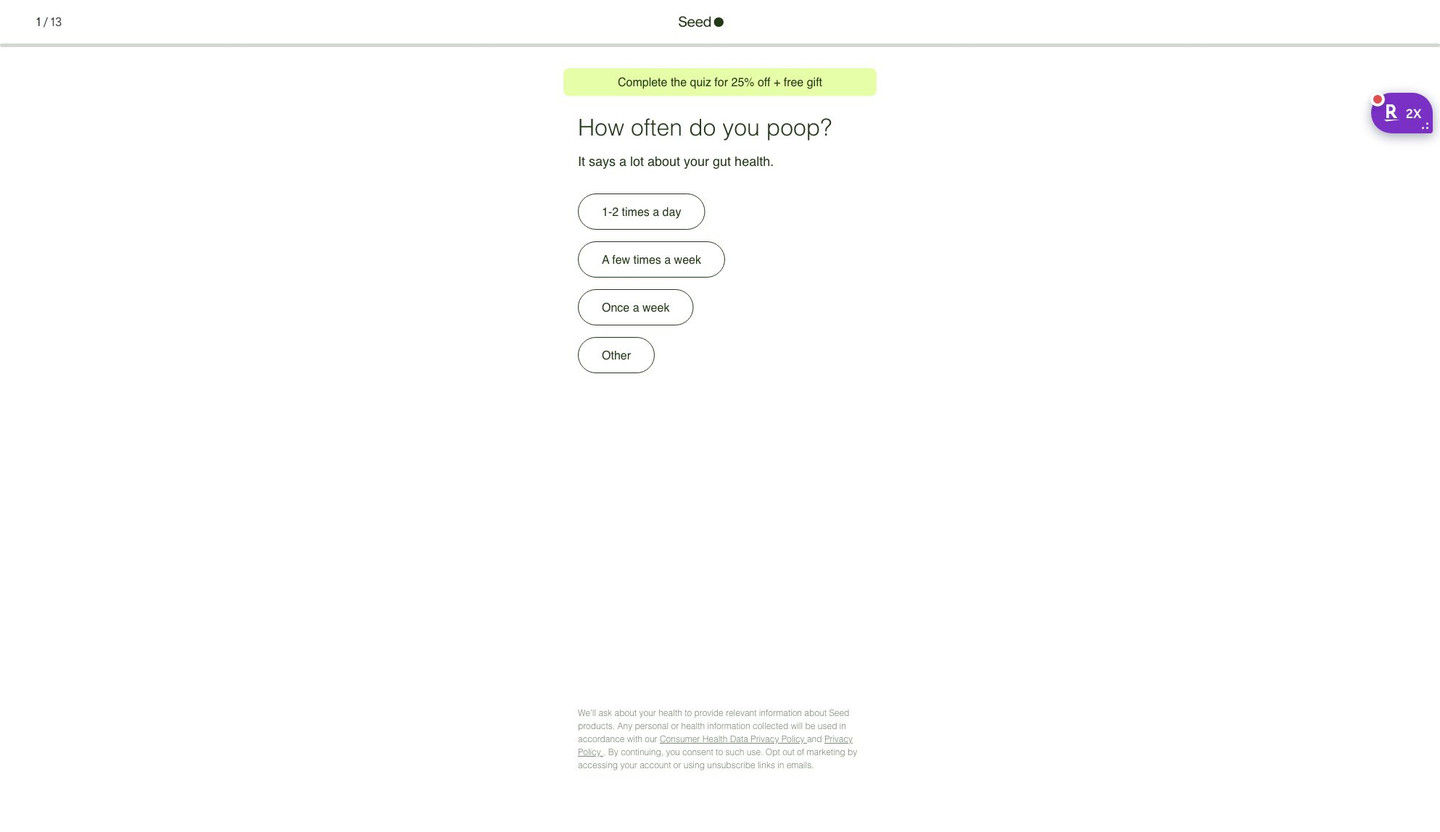
The ad combines a two-in-one product explanation with ranking and customer-count claims, then adds a 25% offer. The CTA now opens a 13-step quiz starting with “How often do you poop?” and promoting 25% off plus a free gift for completion. Compare the creative with the destination and explore the other ads sharing this route.
- Brand
- Seed
- Observed offer
- Advertised 25% off DS-01
- Creative angle
- Product benefits
- Page type
- Quiz
- Ad format
- Image
- Listed start date
- Oct 6, 2026
- Captured
- Oct 19, 2026
- Library ID
- 2346864982807078
- Destination
- seed.com
Selected for its design and offer structure. Ad performance isn’t available in this collection.
What this ad does well
The image says the offer and the outcome in five words, which is exactly what a static ad needs to do in a scroll. Poop More + Bloat Less names two results the viewer can picture, in plain language rather than wellness terms. The jar fills the bottom half of the frame, so the product and the promise share one glance. The copy underneath adds Seed's claims with footnotes and a source line for the ranking, which gives a reader who's interested something to check.
What's missing
There's no proof on the image itself, and nothing that tells the viewer who this is for. The same claims appear in the copy, but a scroller who only sees the image gets an offer and a promise without a reason to believe it. If you make one like this, add one proof element to the image (a star rating, a short review or a customer count) near the headline. The 25% off also has no end date, so giving it one would add a reason to tap now.
Beat by beat
- ImageA close-up of the DS-01 jar against a blue sky, with 25% Off in green over Poop More + Bloat Less and a Try DS-01 Today button.
Offer, outcome and product appear in one glance, so the viewer gets the whole pitch before scrolling past.
- CopyA two-in-one product description and three claims: number one digestive health probiotic, 2 million-plus customers, clinically shown to reduce bloating and gas.
The claims add credibility for viewers who stop to read, with footnotes and a sales-data source.
- HeadlineBloat Less, Feel Better with DS-01, with a Shop Now button.
The headline repeats the bloating outcome right next to the button.
The offer
25% off, the first words on the image and repeated in the copy. The quiz frames 25% off plus a free gift as a reward for finishing.
Where it sends people
The ad sends viewers into Seed's quiz, which is a stronger rung than a homepage because it asks about the visitor before recommending. The first question is about a daily bathroom habit, which follows directly from the Poop More headline, and the banner repeats the discount with a free gift added. Viewers who tapped Shop Now expecting a product page meet a question instead, though. Matching the button to the destination (Take the quiz, or Find your fit) would set that expectation.
The page it sends people to: How Seed's DS-01 quiz turns every ad into the same first question
Seed's DS-01 quiz entry is a 13-step quiz captured on its first screen: a step counter, a banner offering 25% off plus a free gift for finishing, one tap-only question and a consent note. Forty-three ads in the Fluid library send people here, from creator promo-code videos to problem-led, bloating and discount ads.
How the page is built
- 01Header
A 1 / 13 step counter, the centered logo and a thin progress bar answer how long this is going to take.
- 02Offer banner
A highlighted pill promises 25% off plus a free gift for completing the quiz, which answers what the visitor gets for finishing.
- 03Question
A large question about a daily habit, with a one-line reason it matters, answers why Seed is asking.
- 04Answers
Four stacked pill buttons with frequency options let the visitor answer in one tap, with no Next button to find.
- 05Consent note
Small privacy and data-use text at the bottom answers what happens to the health information they share.
The first fixes we would make
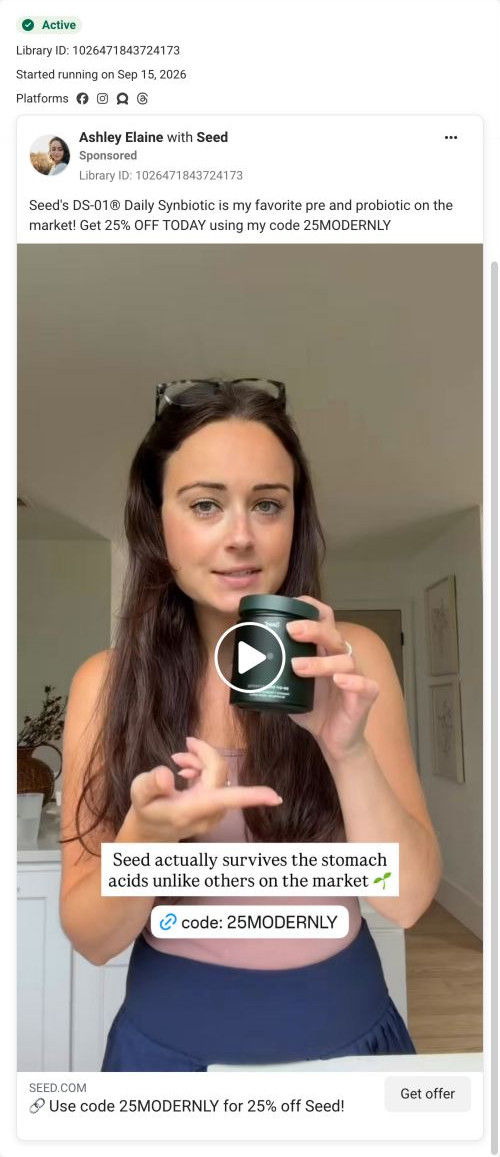
- Creator traffic arrives with a code in the URL (25BOBBY, for example), but the banner reads the same for everyone and never mentions the creator. Add a line like "Bobby's 25% off is applied" for coded traffic, so a viewer who just watched that creator knows they're in the right place.
- The screen doesn't say what the visitor gets at the end besides the discount. Add one short line under the banner saying the quiz ends with a recommendation on whether DS-01 fits them (the page address already asks that question), so 13 steps feel worth finishing.
Read the full breakdown of this page
Three hooks you could test
- Turn the benefit into a picture people get in a second. “Lighter by lunch. Regular by morning.”
- Lead with the uncomfortable problem. “Bloated every afternoon? Start here.”
- Sell the outcome. “Feel like yourself after dinner again.”
What to borrow for your brand
- Put the offer and two plain outcomes in the first five words of a static ad, so the whole pitch reads in one glance.
- Let the product fill half the frame under the headline so the promise and the product are seen together.
- Match the button label to what actually opens next, so a quiz isn't introduced as Shop Now.
One of 50 Seed ads in the Fluid Inspiration Library, captured from the Meta Ad Library on Oct 19, 2026. We record that an ad ran publicly, not how it performed.