
RoSponsored
Esc
How Ro answered the no-insurance objection with Julia Mercedes
A creator video of Julia Mercedes sitting cross-legged on her couch, labeled as a real Ro member and paid partner. She says she didn't have insurance coverage for GLP-1s but could afford paying out of pocket, describes getting the Wegovy pill prescribed and shipped through Ro, and points viewers to Ro's weight-loss quiz.
Ro
71 creatives lead here1 / 71
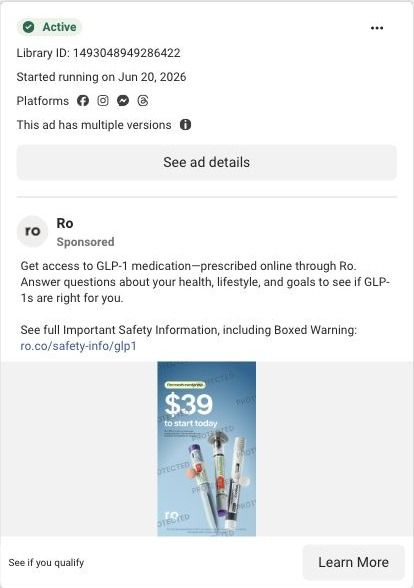
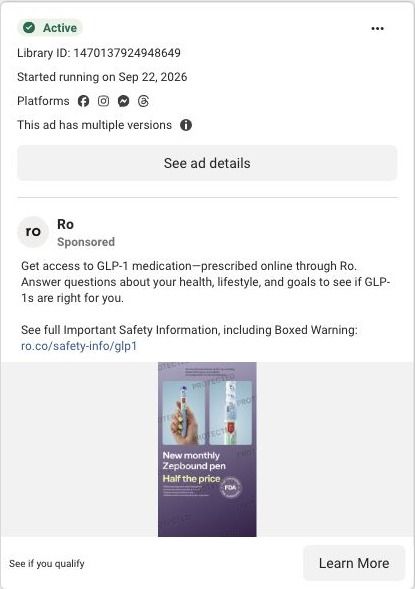
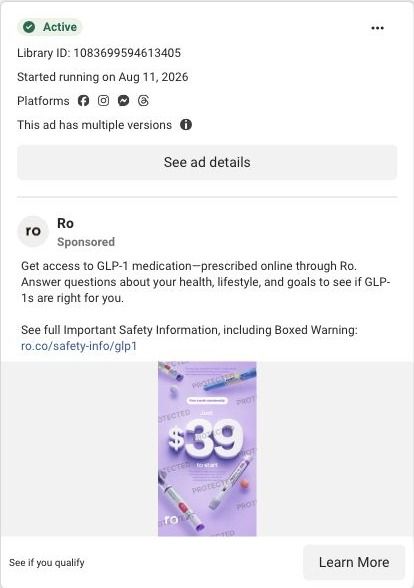
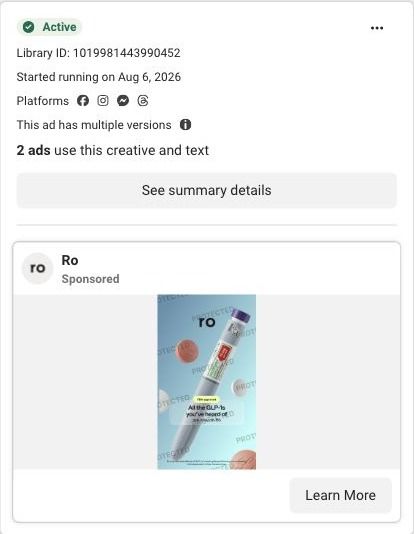
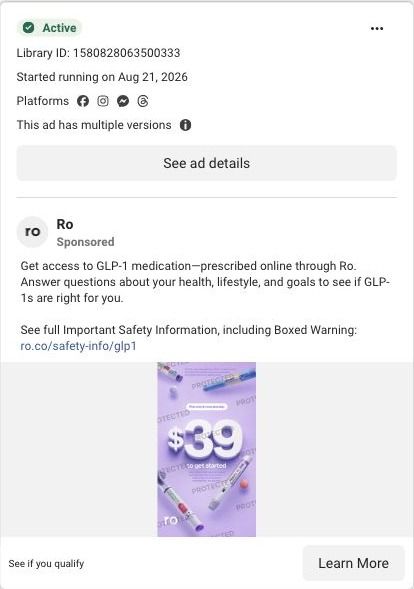
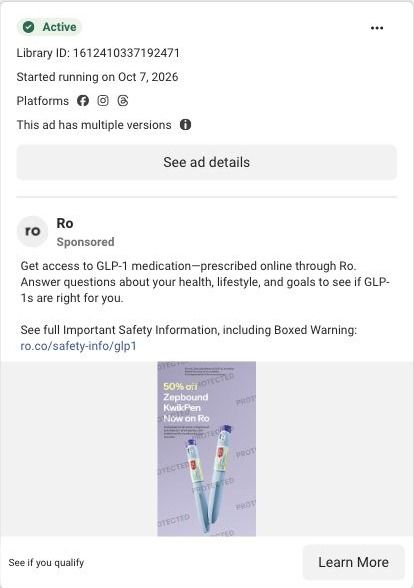
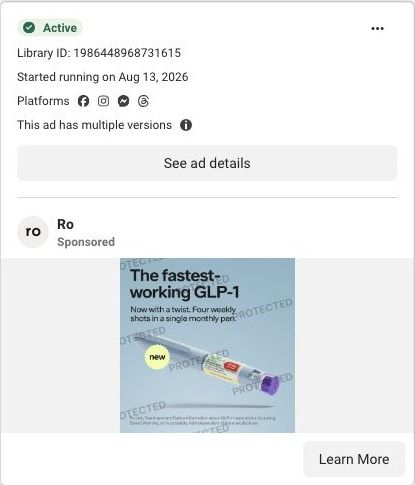
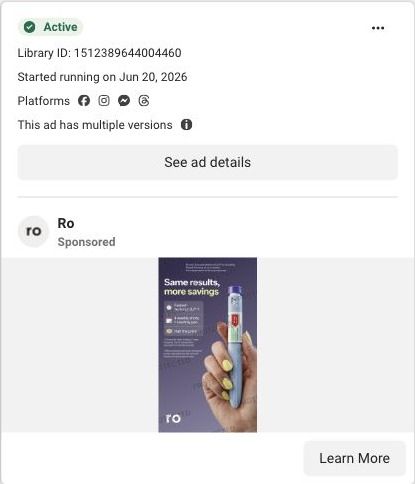
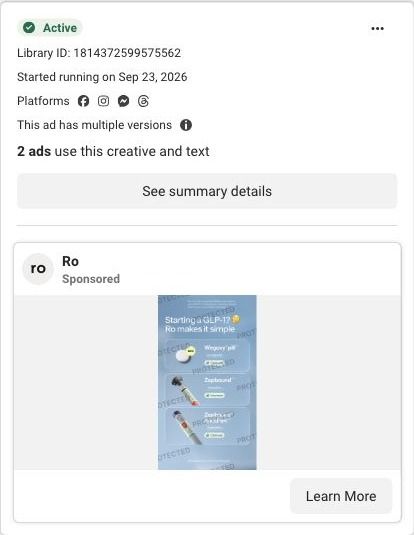
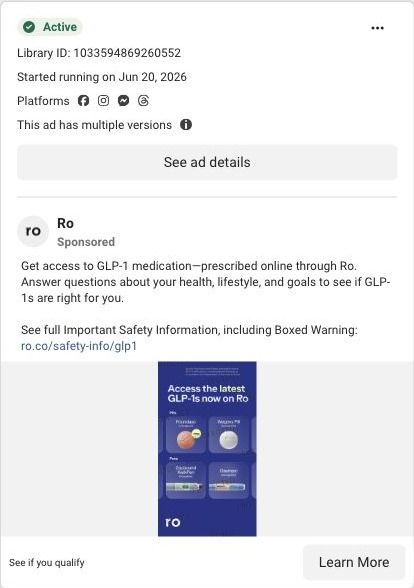
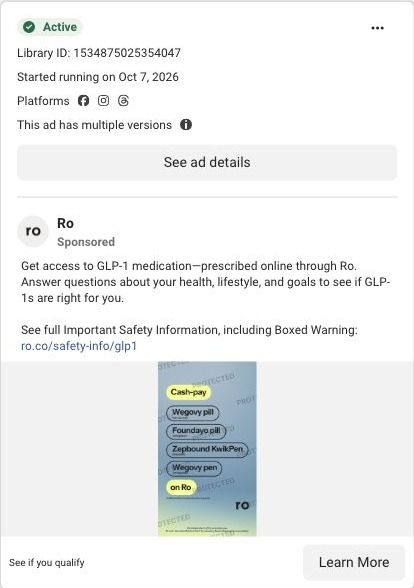
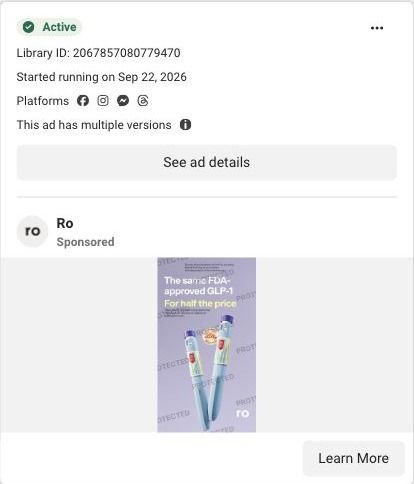
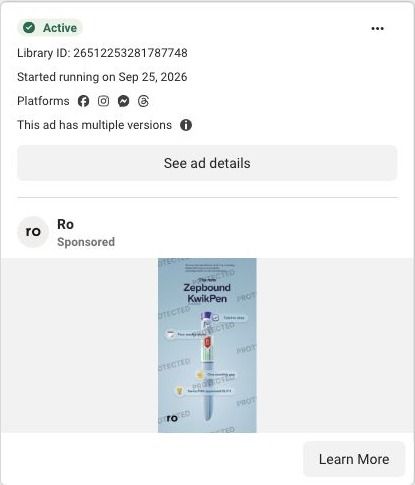
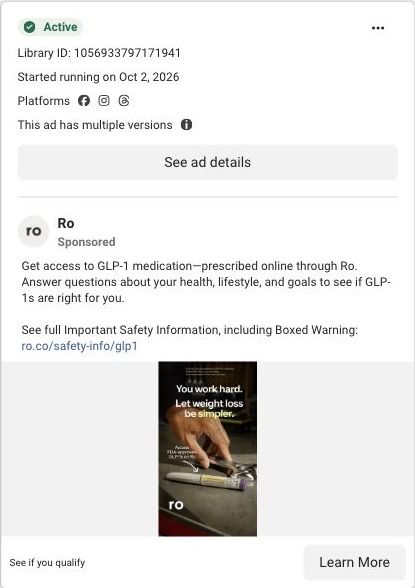
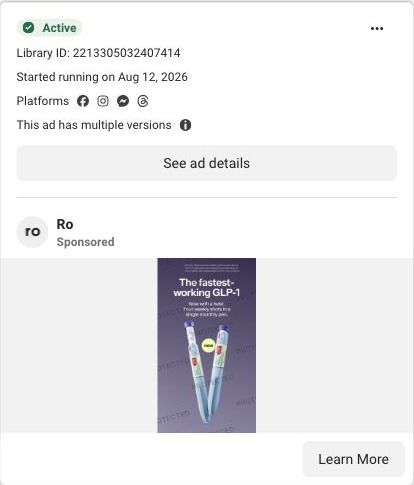
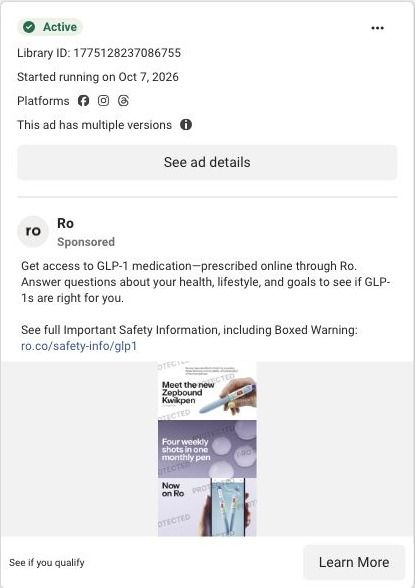
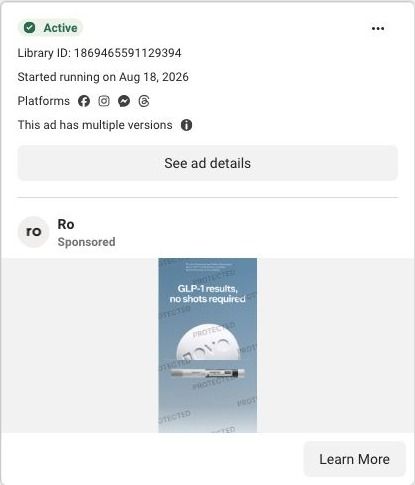
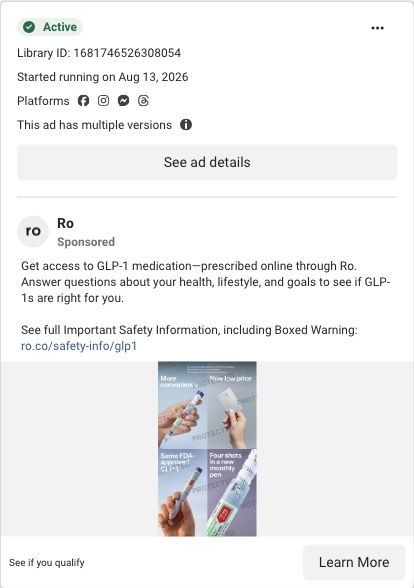
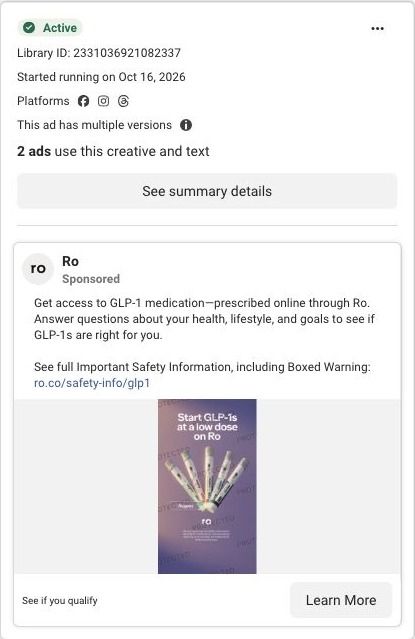
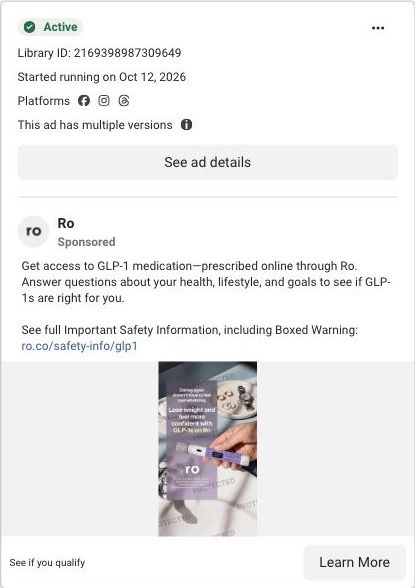
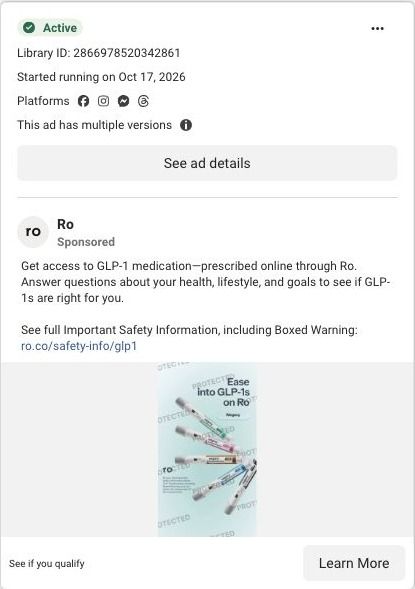
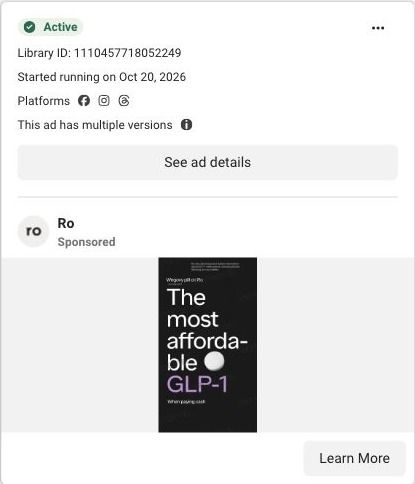
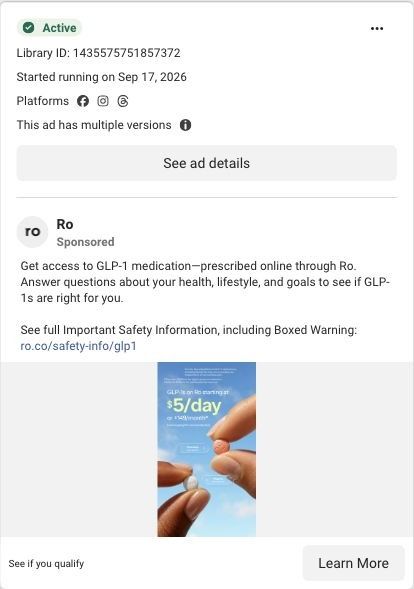
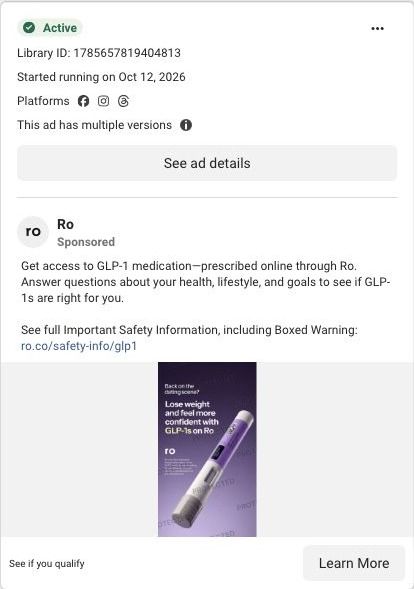
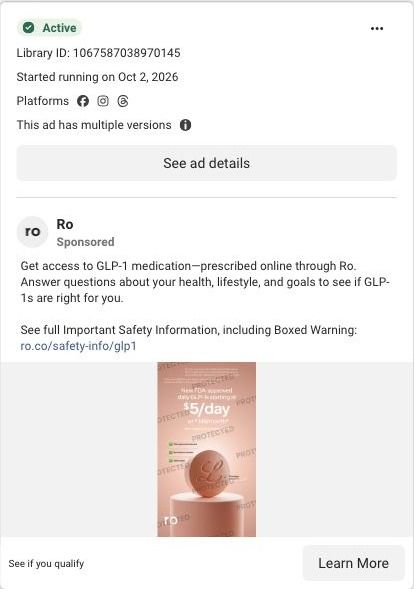
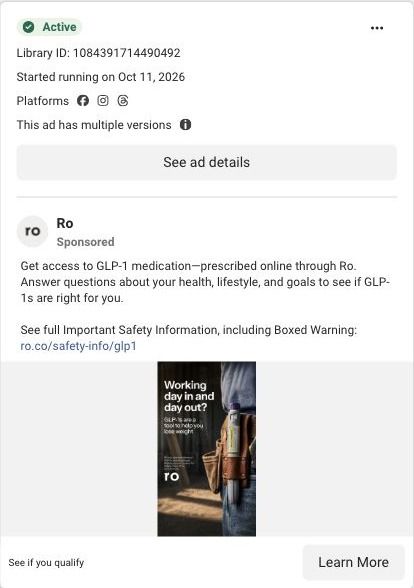
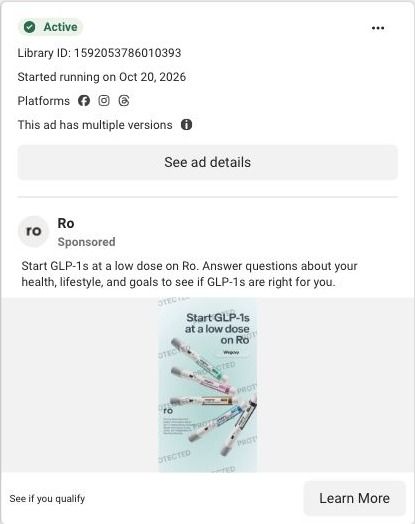
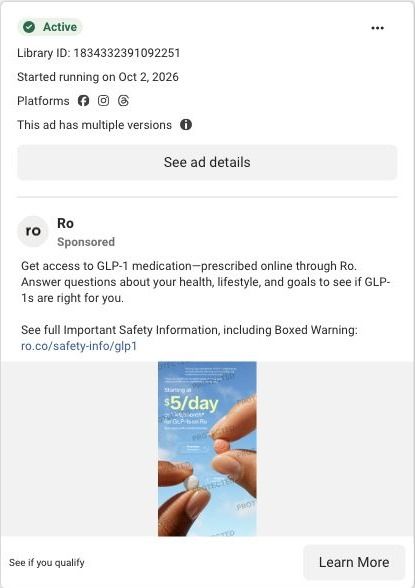
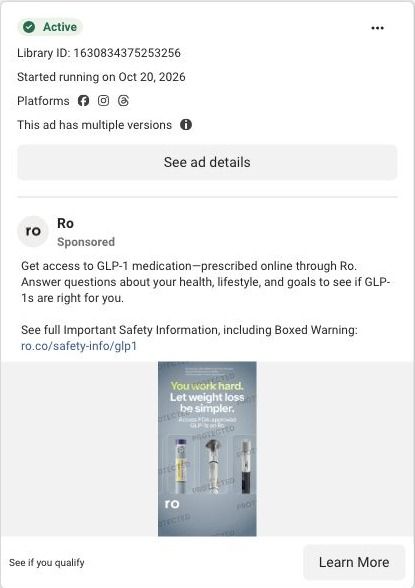
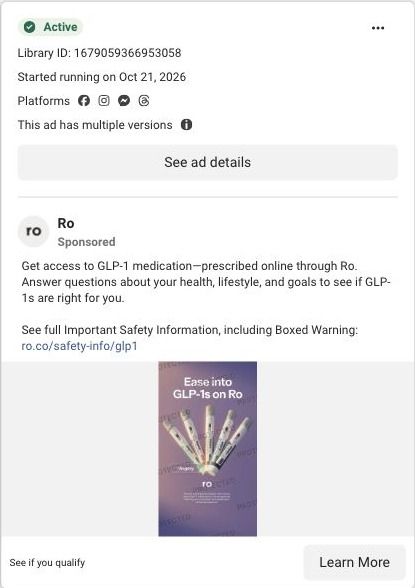
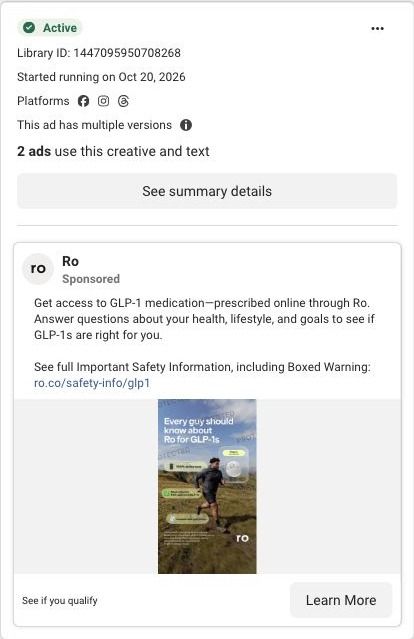
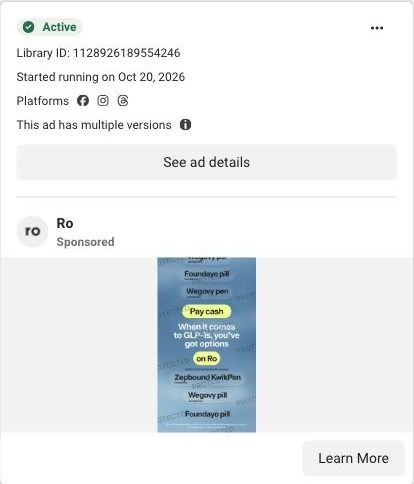
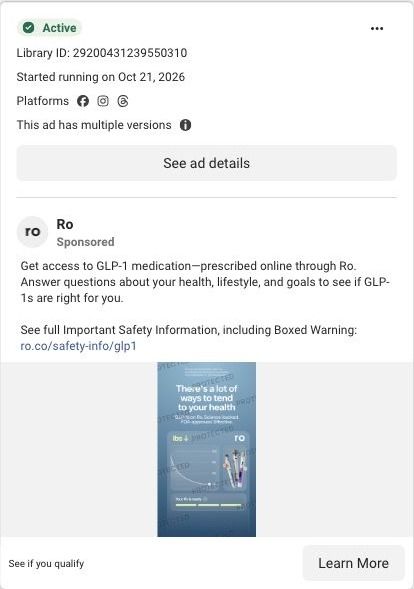
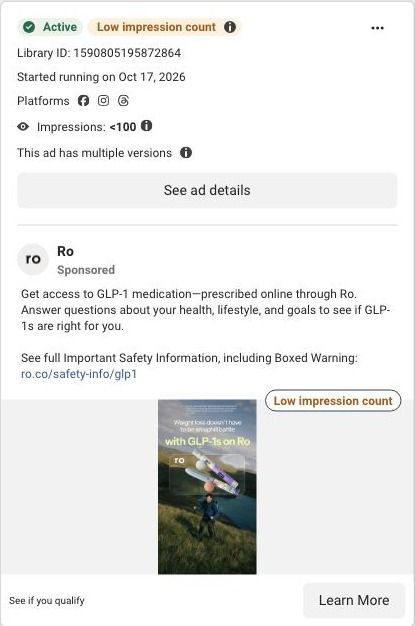
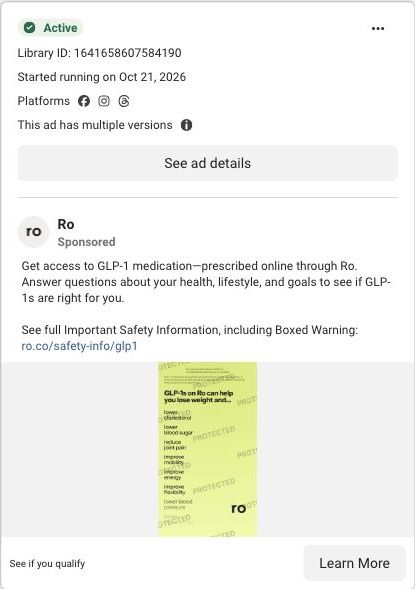
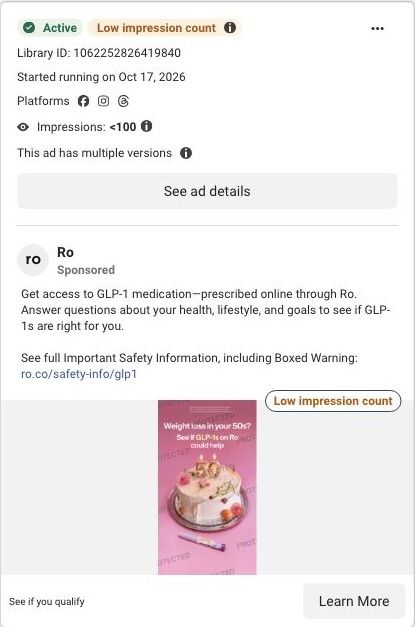
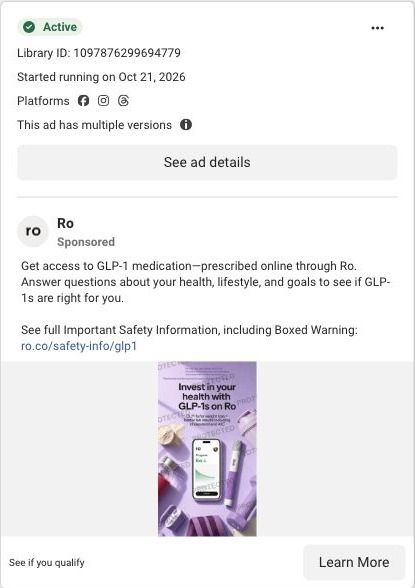
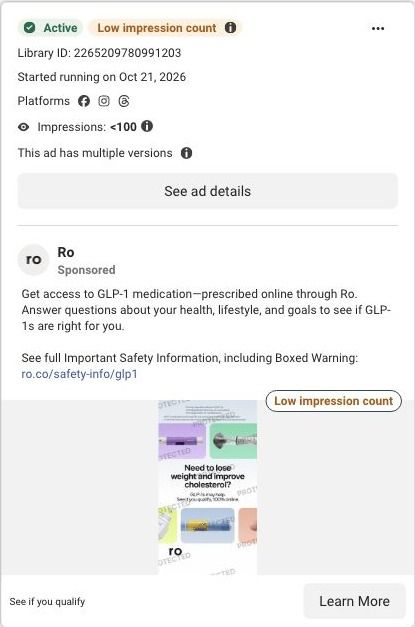
Ro · Serena-led weight-loss quiz
Public page captured October 22, 2026. Promotional sheets and temporary interface overlays were dismissed or removed in the static reference. No personal or medical information was entered. Captured entry screens do not reproduce the complete consultation.
See if you qualify
Visual reference: Creator · seated real-member story. The main campaign sends price, medication-launch, creator and celebrity ads to one Serena-led entrance. A treatment-format question sits in the hero; choosing Learn about both reveals a weight-goal question without leaving the page. Compare the creative with the destination and explore the other ads sharing this route.
- Brand
- Ro
- Observed offer
- Online GLP-1 assessment; medication and membership terms apply
- Creative angle
- Creator stories
- Page type
- Quiz entry
- Ad format
- Video · 0:44
- Listed start date
- Oct 9, 2026
- Captured
- Oct 22, 2026
- Library ID
- 1116296267428309
- Destination
- ro.co
Selected for its design and offer structure. Ad performance isn’t available in this collection.
What this ad does well
Ro's ad opens on an objection a lot of viewers share: no insurance coverage for GLP-1s. Julia answers it from her own experience, saying she still managed to pay out of pocket, which makes the price claim feel personal rather than corporate. The couch setting and direct-to-camera delivery read like a friend explaining what she did. She also walks through the steps (found out she qualified online, medication shipped to her door), and the on-screen text attributes both the cash price and the weight-loss average to Ro's disclosures, with the membership fee noted.
What's missing
She says the pill is affordable, but the ad never shows a price, so the core answer to her opening question is left for the landing page. There's also no reason to act now. If you make one like this, put the actual cash price on screen when the creator mentions it (with the membership fee next to it), so the viewer who shares her insurance situation gets the full answer in the ad.
Beat by beat
- 0-4sJulia on her couch opens on not having insurance coverage for GLP-1s, with the real Ro member and paid partner label.
It names a common objection in the first line, so viewers in the same spot stay to hear the answer.
- 4-15sShe says she could still afford paying out of pocket and was prescribed the Wegovy pill on Ro, with on-screen notes about the cash price and membership fee.
Her experience answers the objection, and the text qualifies the price claim.
- 15-30sShe claims it's one of the most affordable GLP-1s and cites a weight-loss average, with disclaimer text naming the study and saying results may vary.
This adds specifics, attributed and qualified on screen.
- 30-44sShe says she qualified online and got the medication shipped to her door, then tells viewers to tap the link.
Walking through the steps makes the process feel easy to picture before the call to action.
The offer
No stated price in the voiceover. The creator frames the Wegovy pill as affordable when paying cash, and on-screen text notes it's the lowest cash price on Ro with an added membership fee.
Where it sends people
The ad sends viewers to Ro's quiz entry page, the strongest rung of the landing-page ladder because it starts an assessment right away. The GLP-1 pill answer matches the product Julia names, and the top bar's lowest-prices claim echoes her affordability point. What the page doesn't do is speak to her opening objection, since nothing on the entry screen mentions paying without insurance. A line under the question noting that cash pricing is available would finish the answer she started. It's one of 71 ads in the Fluid library that land here.
The page it sends people to: How Ro turns its Serena Williams ads into a one-question start
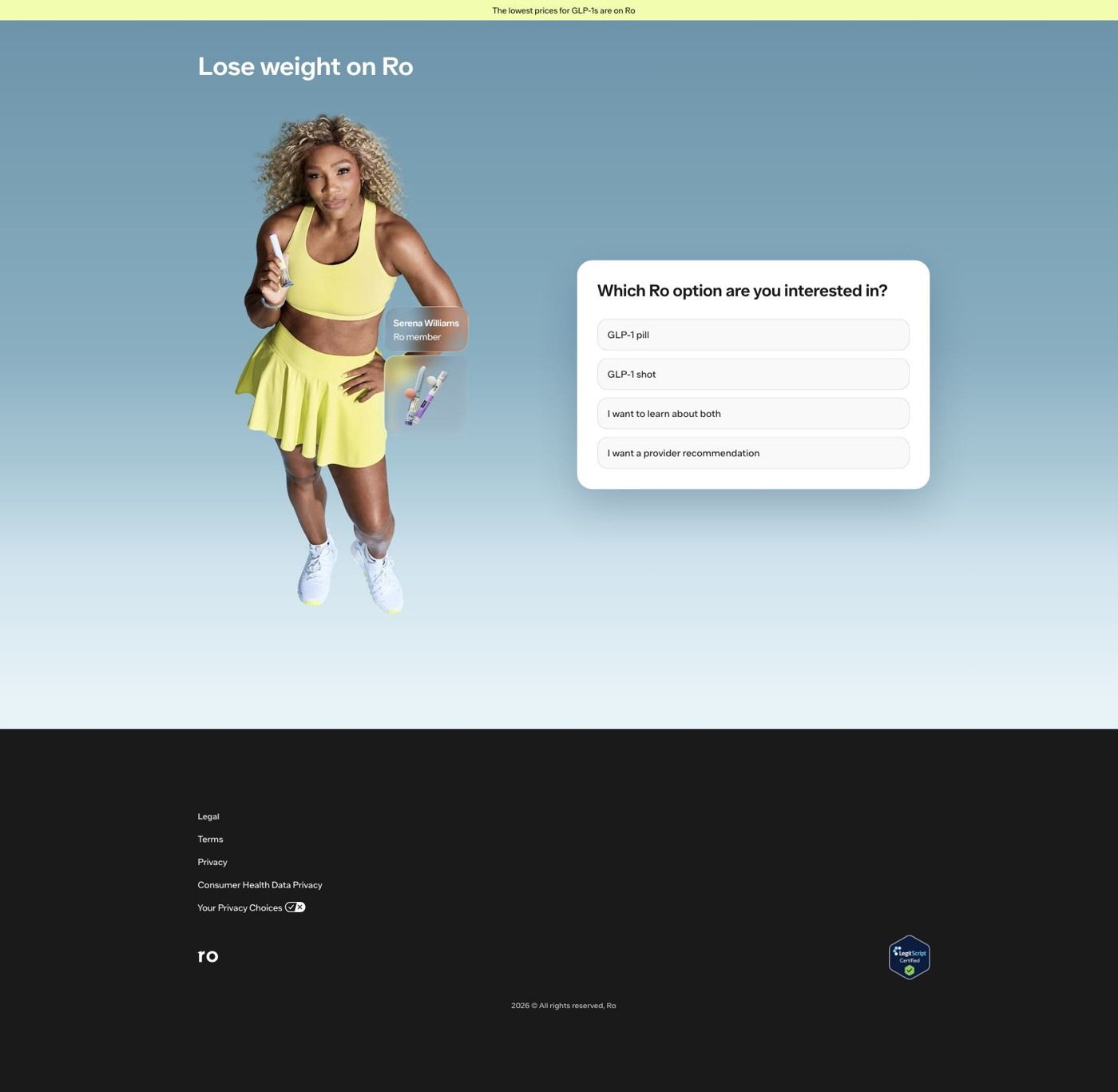
Ro's main weight-loss landing page is a quiz entry: Serena Williams, labeled as a Ro member, stands beside a card asking which GLP-1 option you want. It's the destination for 71 Ro ads in the Fluid library, mostly price-led statics, Serena creator videos and pill-versus-pen product stills, nearly all ending on See if you qualify.
How the page is built
- 01Announcement bar
A pale yellow strip claims the lowest prices for GLP-1s are on Ro, the page's only answer to 'is this affordable?'
- 02Headline
Lose weight on Ro names the category and the brand, so the visitor knows they're in the right place before reading anything else.
- 03Serena Williams photo
Serena holds a pen-style product with a Ro member label and a product thumbnail beside her, answering 'is this the thing from the ad?'
- 04Treatment-format question
A white card asks which Ro option you're interested in (pill, shot, learn about both, or a provider recommendation), which starts the quiz and sorts visitors by how far along they are.
- 05Weight-goal question
After Learn about both, the same card asks how much weight you're looking to lose in ranges plus Not sure yet, keeping the visitor on the page while the quiz continues.
- 06Footer
Legal, terms, privacy and consumer health data privacy links sit beside a LegitScript Certified badge, answering 'is this a legitimate pharmacy?' for anyone who scrolls.
The first fixes we would make
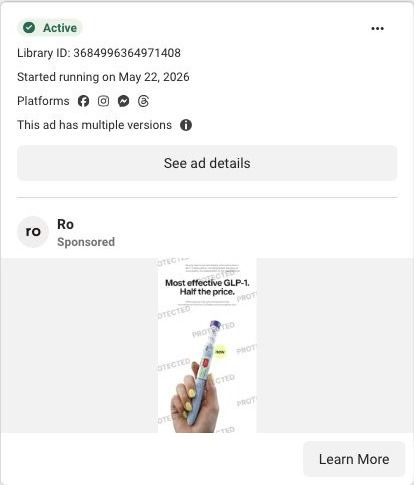
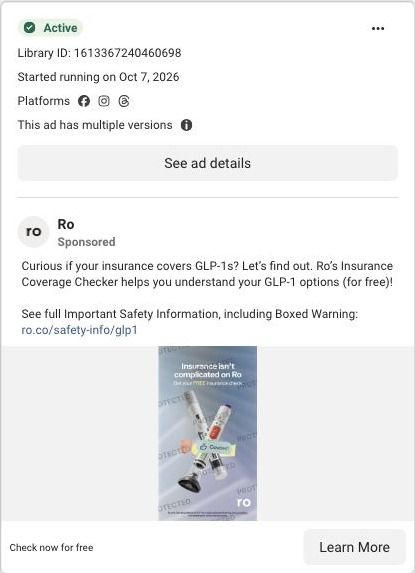
- Many of the ads sending traffic here lead with price (Half the price, Affordable GLP-1, Same results, more savings), and the page answers with one general claim in the announcement bar. Put a starting price under each format option, using the same number the ad showed, so the person who clicked for the price sees it before they answer.
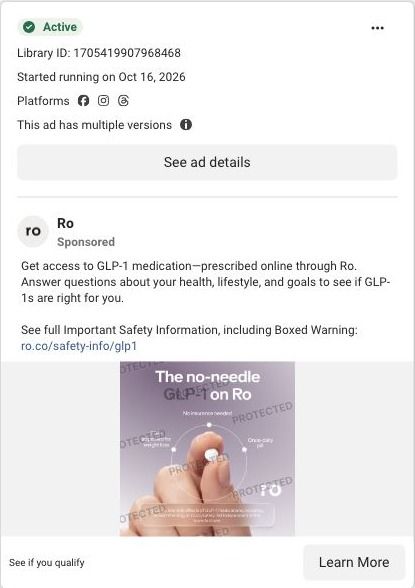
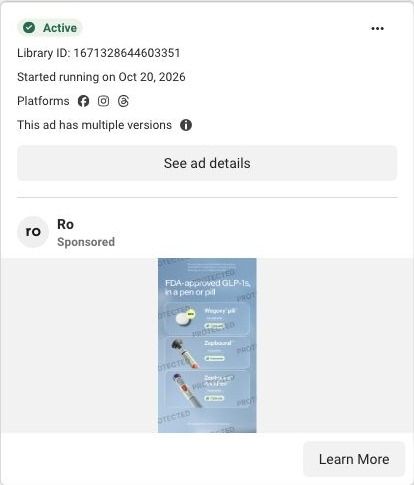
- The format question asks people to choose between a pill and a shot with nothing beside either option. Add a short line under each choice that describes it the way the product-choice ads already do, so someone arriving from a Pill or pen ad can pick without leaving to research.
Read the full breakdown of this page
Three hooks you could test
- Lead with the uncomfortable problem. “My plan didn't cover it either. Here's what I did instead.”
- Show a specific moment of use. “It showed up at my door, and I took it before my coffee.”
- Sell the outcome. “I found a way to start without waiting on my insurance.”
What to borrow for your brand
- Have a real customer open on the objection your price page keeps hearing, then answer it with what they did.
- Film the creator somewhere ordinary, like their couch, so the ad reads as a friend's advice.
- Show every price or results claim's terms on screen while the creator says it.
Transcript
I'll have insurance coverage for GOP ones. I didn't either, but I still was able to afford paying out of pocket with bro. I got prescribed the Bagobi pill on Row, and it's been a game changer. It's one of the most affordable GLP ones on the market, and you can lose 14% of your weight in a year. I chose Roe because they made it simple to get started. I found out I qualified completely online and got the medication shipped right to my door. The GLP1 bill and row has been just the thing I've been looking for to get my health back on track. Tap the link to see if you qualify today.
Text on screen
- DORROTECTED
- insurance
- PROT
- OTECT
- Real Ro member Paid partner
- Don
- PROTECTED
- have
- coverage
- OTECTED
- OTECTE
- ROT
- PROTECT
- -TED
- OTEC
- TECT
- KOT
- HED
- with Ro!
- •ATED
- TEC
- and it's been a game-changer.
- ECTED
- ROTECT
- When paying cash
- PROTEC
- The Wegovy pill is available at the iowest cash price on Ro:
- Additional Ro membership fee required.
- It's one of the most affordable
- PROTECE
- The Wegovy pill is available at the lowest cash price on Ros
- Additional Ro membership fee required
- GLP-1s on the market
- CTED
- PROT.
- The Wegovy pillis available at the lowest cash price on Ro.
- TED
- 1.5 mg
- 30 tablets
- STED
One of 100 Ro ads in the Fluid Inspiration Library, captured from the Meta Ad Library on Oct 22, 2026. We record that an ad ran publicly, not how it performed.