What this ad does well
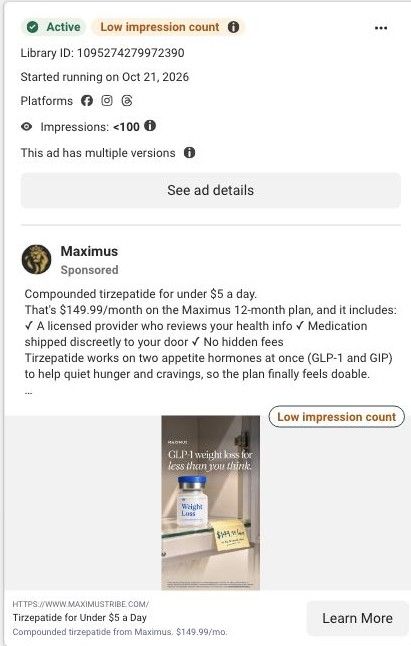
The sticky note is a nice touch: it puts the price inside a scene from someone's home rather than in a banner, so it reads like a note to self. The headline "GLP-1 weight loss for less than you think" speaks to a belief the viewer already holds (that this is expensive) and answers it with the number on the note. The bathroom shelf also hints at where the product lives once it arrives, which makes it feel ordinary and private.
What's missing
The image tells you it's cheaper than you think but doesn't say compared with what, so the claim has nothing to push against. There's also no trust cue near the price. If you make one like this, add the comparison the viewer is already making (what they've heard it costs elsewhere, stated as the brand's own claim with a source) or the licensed-provider line from the copy. Either one gives the low price a reason to be believed.
Beat by beat
- Image
A Weight Loss vial on a bathroom shelf beside a yellow sticky note with the price.It places the product and its cost in a private, everyday setting.
- Headline
"GLP-1 weight loss for less than you think" sits across the top.It speaks to the viewer's assumption about cost and sets up the number.
- Copy
The primary text repeats under $5 a day and the $149.99 monthly plan with its inclusions.It spells out the terms behind the sticky note.
The offer
A sticky note shows $149.99/mo, which the copy explains as the 12-month plan price and reframes as under $5 a day.
Where it sends people
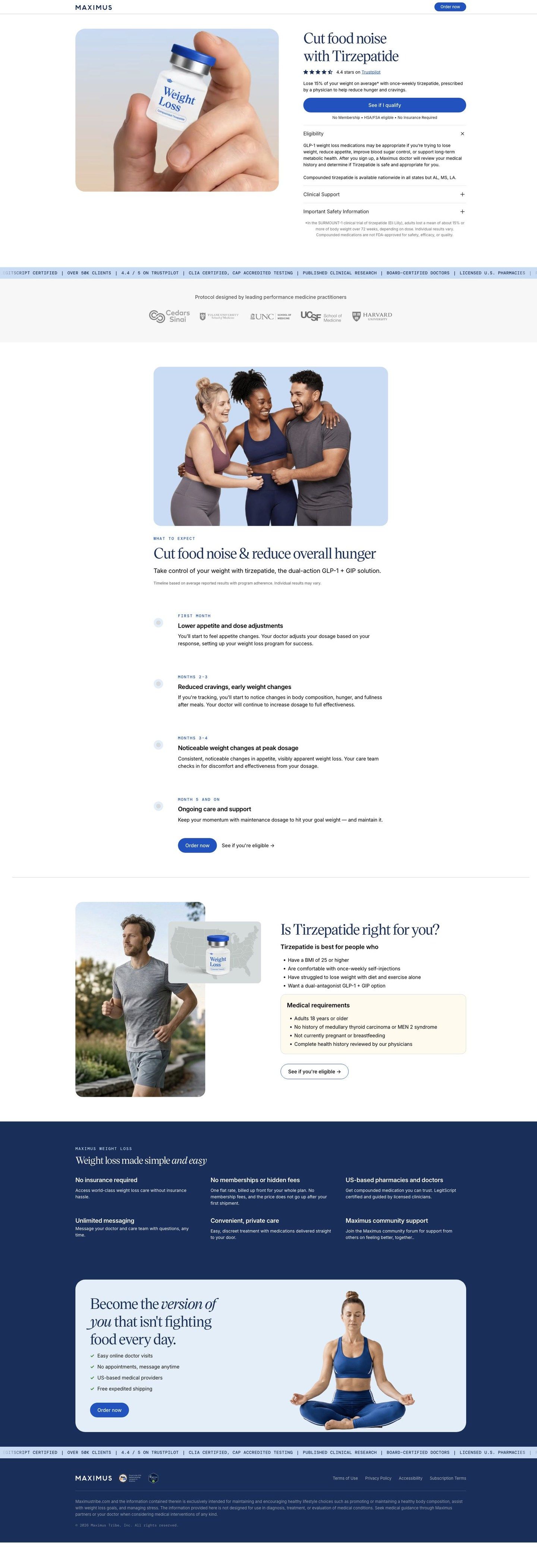
The ad sends people to the Maximus tirzepatide offer page, a focused treatment page rather than a homepage. Its hero reads "Cut food noise with Tirzepatide" with an Order now button in the header, followed by practitioner credentials, a problem and mechanism explanation, a treatment timeline, the offer and start flow, and FAQs with safety details. The ad's whole message is price, and the hero doesn't repeat it, so a visitor scrolls to the offer section to confirm the number. Showing the price and plan length next to the main button would carry the sticky-note idea straight through.
The page it sends people to: How the Maximus tirzepatide offer page handles price-led ad traffic
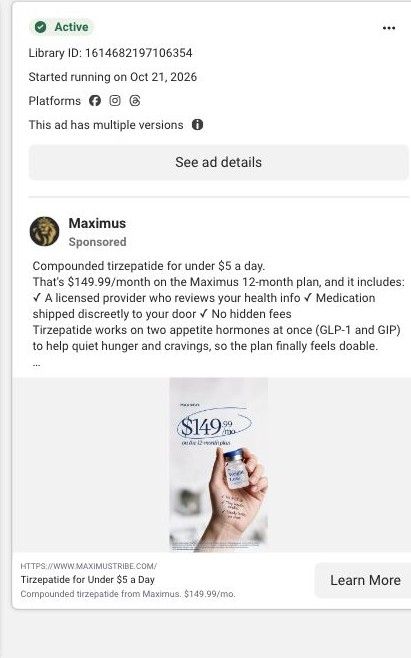
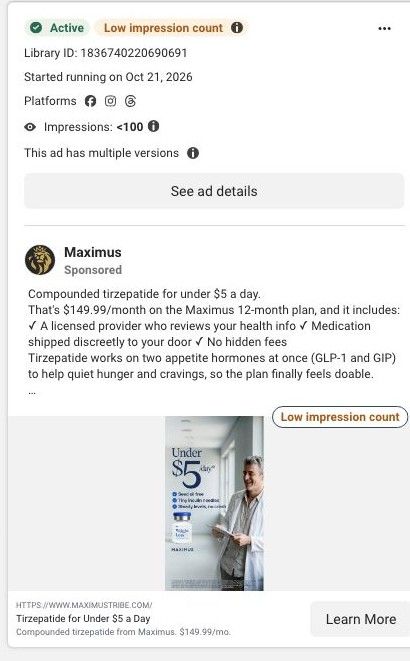
A Maximus tirzepatide offer page with a direct hero, practitioner credentials, a mechanism explanation, a timeline, an offer and start flow, and FAQs. Five of the 11 Maximus ads in the Fluid library send people here, mostly price-led statics like the circled $149.99 and the under-$5-a-day clinician ad, plus a short strength video.
How the page is built
- 01
Treatment offer heroA vial in hand with "Cut food noise with Tirzepatide," a rating, the qualify button and eligibility details answer what is this and can I get it.
- 02
Practitioner credentialsA ticker of trust claims and a logo row answer who stands behind the treatment.
- 03
Problem and mechanism explanationA section describing the dual-action GLP-1 and GIP approach explains how the brand says the treatment works.
- 04
Treatment timelineA month-by-month what-to-expect list answers what the first weeks look like.
- 05
Offer and start flowThe plan and start steps answer what it costs and how to begin.
- 06
FAQs and safety detailsFAQs and safety information answer the last objections before ordering.
The first fixes we would make
- Most ads landing here lead with $149.99/month or under $5 a day, but the hero leads with food noise and doesn't show the price. Put the price and 12-month terms in the hero so price shoppers confirm the deal at a glance.
- This page and the food-noise page share the same hero, so the price-led traffic and the food-noise traffic get the same opening. Give this page a hero built around cost (the price, what's included, no hidden fees) and keep food noise for the other one.
Read the full breakdown of this page
Three hooks you could test
- Call out the habit you're replacing. “You assumed it cost a fortune, so you never checked.”
- Make the product the whole scene. “Your shelf, the product and a sticky note with the price.”
- Turn the benefit into a picture people get in a second. “A sticky note with a number that's smaller than you expected.”
What to borrow for your brand
- Write the price on a prop inside the scene, like a sticky note, so it reads as a personal reminder rather than an ad banner.
- Use a headline that answers a belief about cost the viewer already holds.
- Shoot the product where it will actually live at home so it feels ordinary.
One of 11 Maximus ads in the Fluid Inspiration Library, captured from the Meta Ad Library on Oct 22, 2026. We record that an ad ran publicly, not how it performed.