

Bio.meSponsored
Esc
How Bio.me sold fiber as a travel habit with one suitcase shot
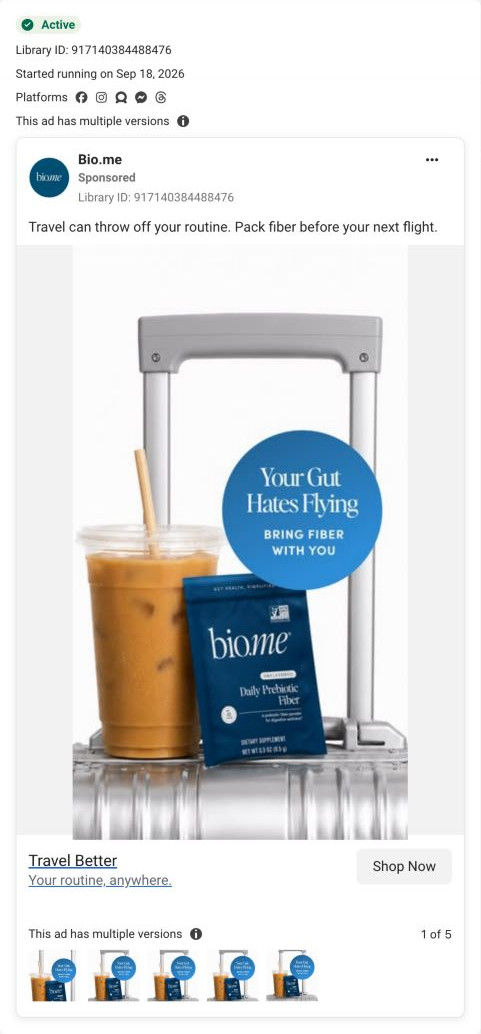
A static image ad from Bio.me that stands a small Daily Prebiotic Fiber sachet and an iced coffee on a suitcase under a Your Gut Hates Flying badge. The copy says travel can throw off your routine. There's no price. It ran on Meta from Sep 18, 2026 and sends people to the Daily Prebiotic Fiber product page.
Bio.me
18 creatives lead here1 / 18


Bio.me · Daily Prebiotic Fiber
Video references use a captured frame. Advertiser benefit claims are shown as advertising examples. The landing page was captured on October 20, 2026 and may show a different offer from the ad.
Your gut hates flying
A fiber sachet and iced drink sit on a suitcase, turning travel disruption into a specific use occasion. Compare the creative with the destination and explore the other ads sharing this route.
- Brand
- Bio.me
- Observed offer
- Travel routine message; no price or discount stated
- Creative angle
- Use occasion
- Page type
- Product page
- Ad format
- Image
- Listed start date
- Sep 18, 2026
- Captured
- Oct 20, 2026
- Library ID
- 917140384488476
- Destination
- bio.me
Selected for its design and offer structure. Ad performance isn’t available in this collection.
What this ad does well
Bio.me names a specific moment people already recognize: the trip where your routine falls apart. The suitcase handle, the iced coffee and the smaller sachet tell the whole story in one frame, so you understand the use case before you read the badge. The headline is blunt and a little funny, and the line underneath (bring fiber with you) is the instruction. The link text, Travel Better and Your routine, anywhere, turns it from a problem into a promise.
What's missing
The ad never tells you that a travel format exists or what it is. The sachet in the photo is smaller than the usual pouch, but there's no word for packets, a count or a price, so a viewer could assume they'd have to pack a full bag. If you make one like this, name the travel product on the image (the page lists Travel Packets as a packaging option) and show how many come in a box, so the click is about buying the travel version rather than figuring out whether there is one.
Beat by beat
- CopyThe primary text says travel can throw off your routine and suggests packing fiber before your next flight.
It names the moment and gives the instruction in one breath.
- ImageA small sachet and an iced coffee sit on a suitcase with the handle extended.
The props place the product in a travel day without any explanation.
- ImageA blue circle reads Your Gut Hates Flying, with bring fiber with you underneath.
The joke gets attention and the second line turns it into an action.
- HeadlineTravel Better, with Your routine, anywhere as the description.
It reframes the problem as a promise right next to the button.
The offer
No price or discount. The ad frames fiber as a routine you can keep on the road.
Where it sends people
This one has a better landing than it uses. It goes to the Daily Prebiotic Fiber product page (a standard product page), and that page has a packaging selector with Travel Packets marked travel friendly next to the 30-Day Supply. But the observed page opens with the 30-day pouch selected, so a traveler has to spot the option themselves. Linking the ad to the travel packets variant, with a packet shot in the main image, would match the suitcase they just saw.
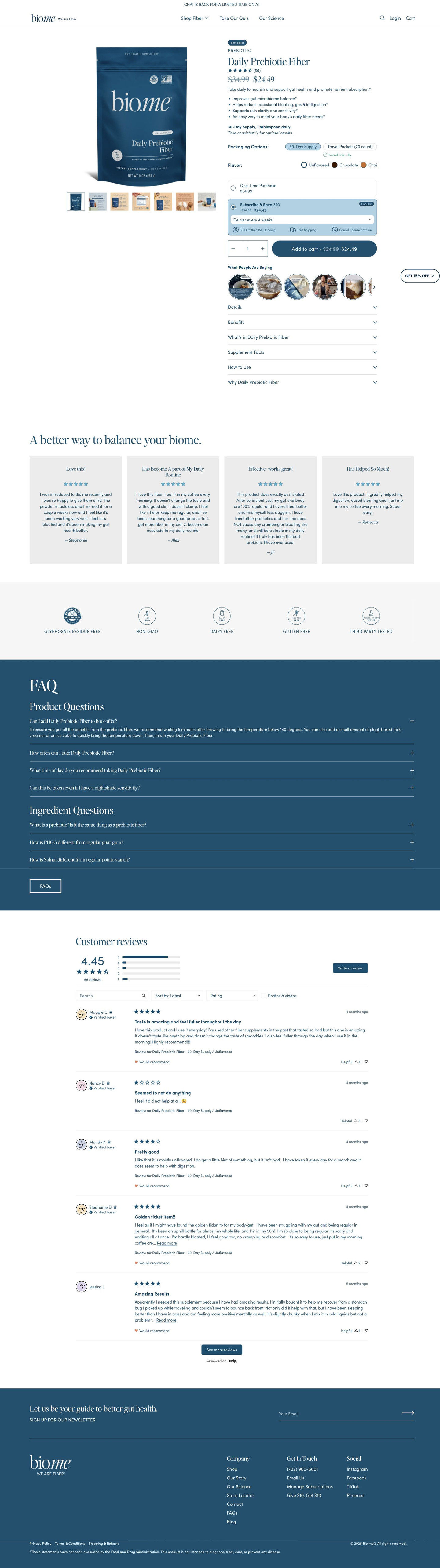
The page it sends people to: How Bio.me's Daily Prebiotic Fiber page sells a subscription
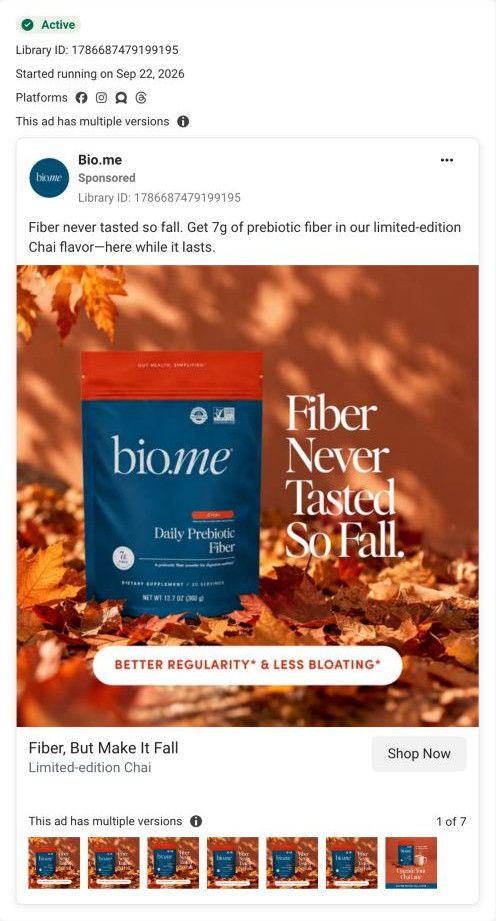
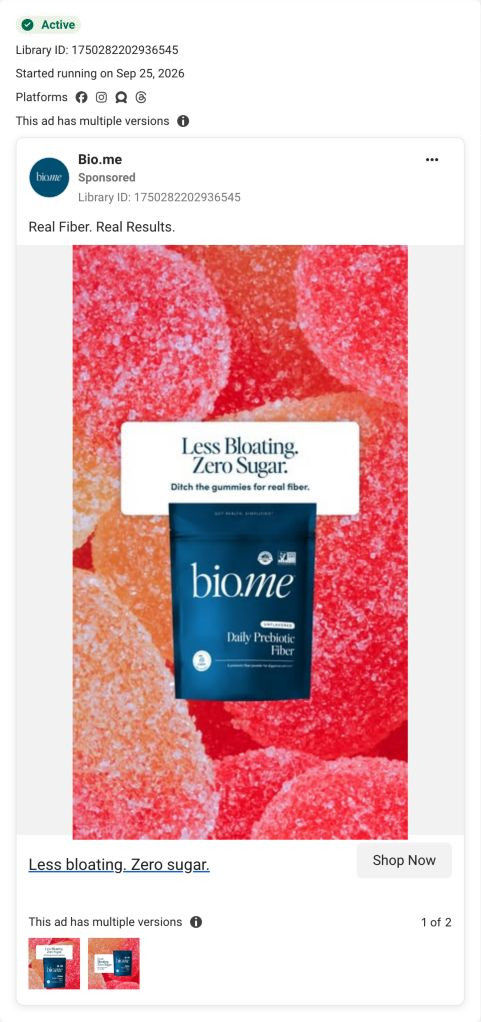
Bio.me's Daily Prebiotic Fiber product page is short and subscription-first: the buy box carries the price, flavors, a pre-selected Subscribe & Save card and customer videos, with reviews, trust icons and an FAQ below. 18 ads in the Fluid library send people here, from Chai launch statics and habit-switch images to creator stories and comment replies.
How the page is built
- 01Announcement bar
A single limited-time line about the seasonal Chai flavor answers whether there's anything new worth buying now.
- 02Buy box
A pack shot with a gallery of infographic, lifestyle and supplement-facts images sits beside the badge, rating, price, a one-line promise, benefit bullets, a dosage line and the packaging and flavor selectors, answering what it is, what it costs and which version to pick.
- 03Purchase options
A one-time card and a pre-selected Subscribe & Save card with a delivery dropdown and perk icons answer how to save and whether a subscription locks you in.
- 04Customer videos
A row of round UGC thumbnails titled What people are saying sits directly under Add to cart and answers whether real people use it.
- 05Buy-column accordions
Details, benefits, ingredients, supplement facts, how to use and why this product answer the label reader's questions without making the page longer.
- 06Review highlight
A headline and quote cards with titles, stars and first names answer whether it works for people like the buyer, in customers' words.
- 07Trust strip
Line icons for residue free, non-GMO, dairy free, gluten free and third-party tested answer whether it's clean and safe to try.
- 08FAQ
Product and ingredient questions on a brand-color band handle the remaining objections before checkout.
- 09Full reviews
An average rating, distribution bars, search, sort and filters let a careful buyer dig into the reviews.
- 10Newsletter and footer
A newsletter band and the footer with the supplement disclaimer catch visitors who aren't ready to buy.
The first fixes we would make
- Many of the ads sell a specific flavor or format (Chai, Chocolate, travel packets), but the observed page opens on the Unflavored 30-day pouch. Link each ad to its matching variant so the selector and main image already show what the click promised.
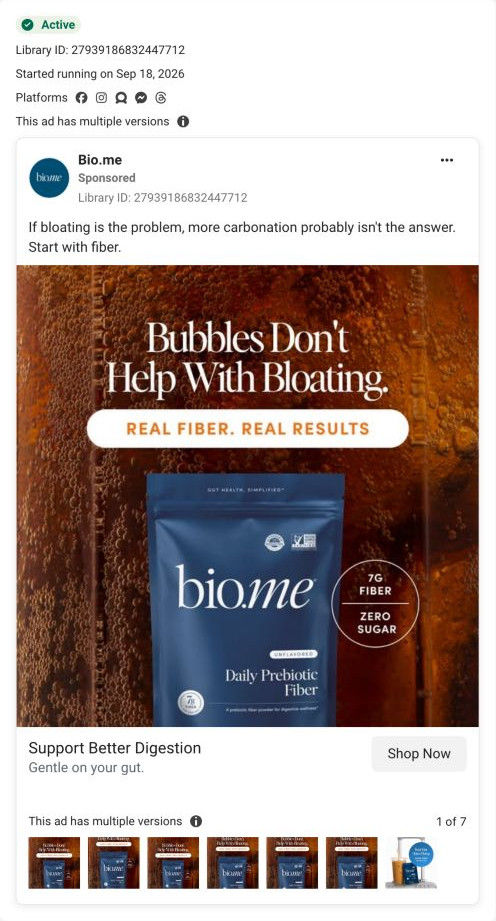
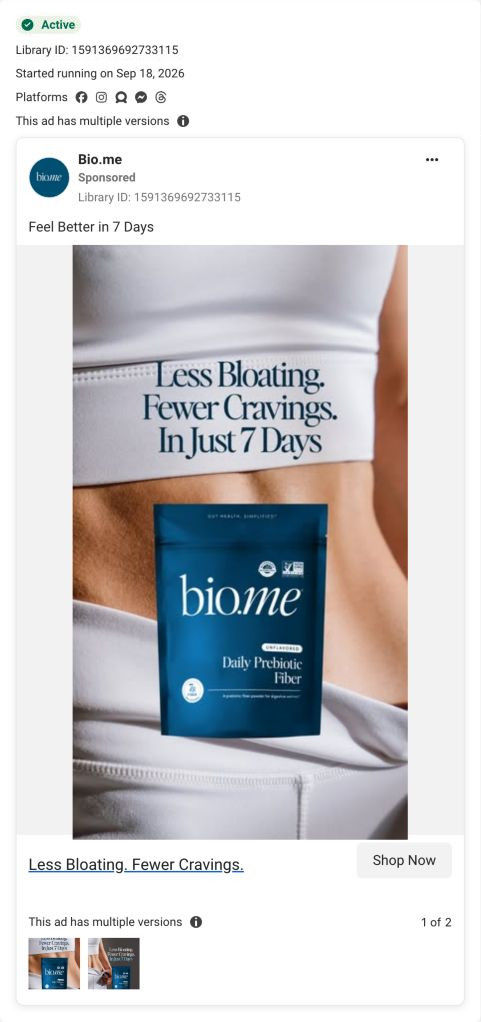
- Several ads lead with bloating, while the page's opening promise is broad gut health. Build a bloating landing page, or route those ads into the quiz Bio.me already links in its header, so the page starts on the problem the ad named.
Read the full breakdown of this page
Three hooks you could test
- Show a specific moment of use. “Gate B12, one packet into my iced coffee.”
- Lead with the uncomfortable problem. “Every trip, the same thing: my routine stays home.”
- Turn the benefit into a picture people get in a second. “Your whole routine, small enough for a carry-on pocket.”
What to borrow for your brand
- Pick one recurring moment where your customer's routine breaks (travel, holidays, a new job) and build the image entirely around it.
- Show the smaller travel format in the photo and name it on the image, so the click is about buying the right version.
- Deep-link a use-occasion ad to the matching variant on your product page so the selector already shows what the ad promised.
One of 20 Bio.me ads in the Fluid Inspiration Library, captured from the Meta Ad Library on Oct 20, 2026. We record that an ad ran publicly, not how it performed.